Longevity
Life expectancy
Its usual life expectancy is between 14 and 16 years.
Build
A robust breed?
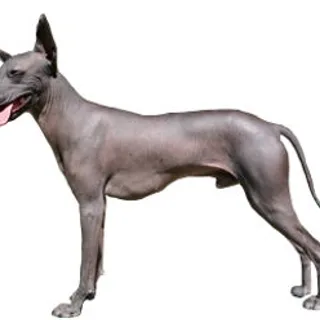
Its robustness is average to good. The main vulnerability described lies in its naked skin, less protected against cold, heat and external aggressions.
Watch points
What to watch for
Regular attention must be paid to the condition of the skin and to dentition, in addition to the usual veterinary follow-up.
Hip dysplasia : Like many dogs, the Mexican Hairless Dog can have a joint malformation that promotes pain and osteoarthritis, especially in cases of overweight.
Eye conditions : An ophthalmological examination of breeding dogs and monitoring of tearing or vision remain useful.
Patellar luxation : Common in small dogs, it manifests as an intermittent abnormal gait.
Periodontal disease : Tartar and dental loosening are major points of vigilance in small sizes.
Climate
Cold and heat tolerance
The absence of hair reduces its tolerance to harsh temperatures. It is therefore advisable to limit its exposure to cold as well as to high heat and to adapt outings to weather conditions.
Weight
Tendency to gain weight
Its tendency to gain weight is moderate. Portions must be adapted to its size, its age and its level of physical activity.
Daily life
Good habits to keep it healthy
- Regularly examine the skin and moisturize it with a suitable cream.
- Wash the dog at a reasonable frequency with a suitable shampoo.
- Brush the teeth frequently to limit tartar and bacteria.
- Trim the claws when they do not wear down naturally.
- Adapt outings to difficult temperatures.
Vaccination
Xoloitzcuintli vaccines: vaccination schedule
Which vaccines for a Xoloitzcuintli? Like all cats, the Xoloitzcuintli receives essential vaccines from 8 weeks old: Typhus (panleukopenia) and Coryza. The kitten primary vaccination for Xoloitzcuintli is given in several injections 4 weeks apart, followed by a first booster at 1 year, even if it lives in an apartment. Depending on its lifestyle (outdoor access, multi-cat household, shows, travel), your veterinarian may complete the protocol with vaccines against Feline leukemia (FeLV), Rabies and Chlamydiosis.
| Vaccine | Primary series | First booster | Then | Who for? |
|---|---|---|---|---|
Typhus (panleukopenia)Core Feline panleukopenia (cat parvovirus) | 8 weeks · 12 weeks · 3 months | 1 year | every year | All pets |
CoryzaCore Feline herpesvirus and calicivirus | 8 weeks · 12 weeks · 3 months | 1 year | every year | All pets |
Feline leukemia (FeLV)Lifestyle-based Feline leukemia virus | 8 weeks · 12 weeks | 1 year | every year | Outdoor cats, cats living in a group or in a cattery |
RabiesLifestyle-based Rabies | 12 weeks | 1 year | every year | Mandatory for travel abroad, cat shows and most boarding kennels |
ChlamydiosisLifestyle-based Chlamydia felis (contagious conjunctivitis) | 8 weeks · 12 weeks | 1 year | every year | Cats living in groups, catteries, show cats |
Adult Xoloitzcuintli vaccine boosters are annual for cat flu and leukemia if it goes outdoors; for panleukopenia, a booster every three years is often sufficient after the first booster. Your veterinarian will adjust the schedule to your cat’s lifestyle.
Which boosters for your Xoloitzcuintli?
Enter your companion’s age: we list the vaccines to do now and the next boosters.
Adopting well
Adopting a healthy Xoloitzcuintli
Regular veterinary follow-up must in particular monitor the skin and oral health, two points to which its care pays particular attention.
This information is provided for guidance only and does not replace a veterinarian’s advice. If you have any concerns about your pet’s health, consult a professional.