Origins
Where does it come from?
The Chien de montagne des Pyrénées, often called Patou, is a very ancient breed established for centuries in the Pyrenean massif. Selected for the protection of herds against predators, it has established itself through its courage, its power and its autonomy. Over time, it has also been used for guarding homes and appreciated in aristocratic circles, notably under Louis XIV. Its standard was structured at the end of the 19th century then registered in France in 1923, before definitive recognition by the FCI in 1955.
Appearance
What does it look like?
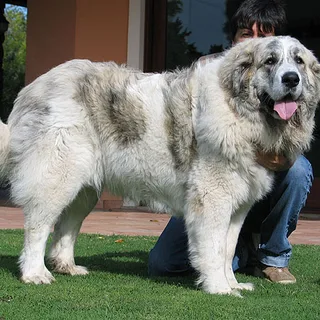
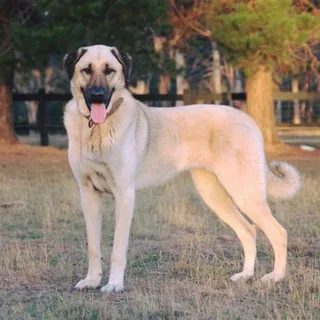
The Chien de montagne des Pyrénées is a very large dog with a powerful build, harmonious and elegant. Its head remains proportionate to the body, with almond-shaped eyes with a gentle and intelligent expression, small triangular ears and a long, well-feathered tail. Its coat is fairly long, supple, flat and dense, with an abundant undercoat that protects it well from the cold. The coat is most often white, sometimes marked with light grey, pale yellow or orange patches on the head, the ears, the base of the tail or a few areas of the body.
Temperament
Temperament and personality
Calm without being sluggish, affectionate with his own and naturally protective, the Pyrenean Mountain Dog stands out for a great nobility of character. He often shows himself reserved with strangers, but deeply gentle with his family and generally very patient with children. His past as a livestock guardian gives him a real capacity for decision and a certain independence, which explains his temperament that is at once tender, vigilant and self-assured.
Living together
Living with children and animals
This dog needs space, stable reference points and a consistent family life to thrive. He likes to observe, patrol and stay attentive to his environment, especially outdoors. Long outings, walks in nature and moderate activities suit him well, whereas dense urban life and restricted spaces suit him much less. He tolerates cold very well thanks to his abundant coat, but heat requires greater vigilance.
Training
Training and socialization
The education of the Pyrenean Mountain Dog must be early, regular and calm. It is an intelligent dog, endowed with an excellent memory, but also with a real autonomy of thought, which requires firm, consistent handling without brutality. Socialization from the youngest age is essential to channel its natural distrust of strangers and promote good relationships with other animals. With a clear framework and fair requests, it becomes a reliable and pleasant companion.
Budget
Pyrenean Mountain Dog price & budget
The purchase price varies mainly depending on the seriousness of the breeding, the pedigree, the screenings carried out on the breeding dogs and the quality of the follow-up offered. For a breed of this size, you must also anticipate a regular maintenance budget higher than that of an average dog.
View cost breakdownHealth
Health at a glance
The Pyrenean Mountain Dog is an overall robust breed, well adapted to harsh conditions, but its large size requires careful joint and digestive monitoring. As with many giant dogs, growth, weight and exercise pace strongly influence long-term comfort. Serious veterinary follow-up and rigorous breeding selection remain essential.
Prevention & watch pointsDiet
Feed it well
The Pyrenean Mountain Dog needs good-quality food, suited to large or very large dogs and to its activity level. Digestion must remain a priority, with well-structured meals and particular attention to growth in the young dog.
Our feeding adviceDid you know?
Anecdotes and popularity
The nickname Patou is widely used in France to refer to the Pyrenean Mountain Dog, especially in its traditional role as a protector of herds. The breed has also entered the popular imagination thanks to Belle, the large white female dog from Belle and Sébastien, which has lastingly associated this dog with an image of quiet strength and loyalty.