Origins
Where does it come from?
The presence of the Spanish Mastiff in the Iberian Peninsula has been attested for at least two millennia. Originating from Extremadura, it long accompanied shepherds and flocks, notably of Merino sheep, during transhumance movements. Selected for its power, courage and stability, it established itself as a formidable protector against wolves and other predators, while retaining a calm temperament with its family.
Appearance
What does it look like?
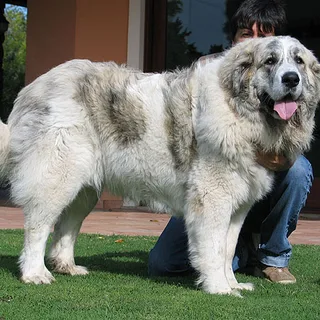
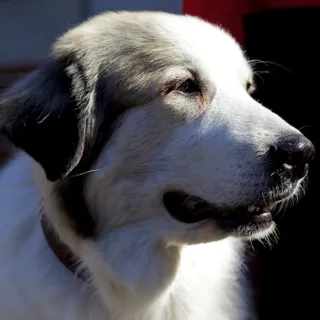
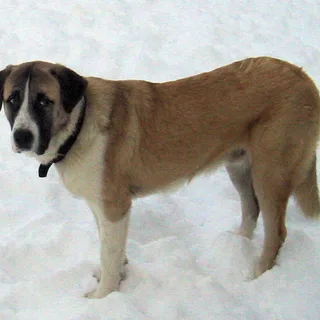
The Spanish Mastiff is a very large molossoid dog, powerful, rectangular and solidly built, with a compact bone structure and developed musculature. Its head is massive and square, the neck broad and strong, the chest ample and deep, and the tail thick at the base bears longer hair. Its semi-long, dense and thick coat covers the body uniformly and ideally comes in yellow, fawn, red, black, wolf-grey or stag-red, even if color mixtures are permitted.
Temperament
Temperament and personality
The Spanish Mastiff is a calm, noble, self-assured dog and deeply protective. Very attached to its social group, it is affectionate with its own, but naturally reserved and deterrent toward strangers. Its guarding instinct is pronounced, without being agitated or unnecessarily reactive in everyday life.
Living together
Living with children and animals
On a daily basis, the Spanish Mastiff behaves like a calm, observant and not very demonstrative dog, who prefers to quietly watch over its environment rather than multiply solicitations. It appreciates space, stable reference points and regular walks without excess. Its size requires serious management of interactions, movement and rest, especially during growth.
Training
Training and socialization
The education of the Spanish Mastiff must begin early, with thorough socialization and a consistent framework. Its strength, its relative independence and its protective instinct require an experienced handler, capable of using positive, consistent and clear methods. Well guided from the youngest age, it becomes a reliable companion, but bad habits are much more difficult to correct once adult.
Budget
Spanish Mastiff price & budget
The purchase price of the Spanish Mastiff varies mainly depending on the quality of the breeding, the lineage, compliance with the standard and the availability of the breed. Its large size also means anticipating ongoing costs related to food, living space and health monitoring.
View cost breakdownHealth
Health at a glance
The Spanish Mastiff is overall a hardy and resilient dog for its size, but its very large build exposes it to several classic concerns of giant breeds. Well-managed growth, an appropriate diet and attentive veterinary monitoring are essential to preserve its joints and its digestive comfort.
Prevention & watch pointsDiet
Feed it well
The Spanish Mastiff needs a balanced, regular diet adapted to giant breeds, without excess energy or mineral deficiencies. The quality of the ration plays a major role during growth, then in maintaining weight and joint comfort in adulthood.
Our feeding adviceDid you know?
Anecdotes and popularity
The Spanish Mastiff is closely linked to the history of transhumance in Spain. Its traditional mission was to escort and defend herds over long distances, which explains both its great mental endurance, its apparent calm, and its ability to intervene firmly in the event of a real threat.