Origins
Where does it come from?
The Slovak Hound corresponds to an ancient breed whose origins probably date back several hundred years. Developed in Slovakia, it was however officially recognized only in the modern era. The Fédération Cynologique Internationale has recognized the breed since 1963 under number 244, within group 6.
Appearance
What does it look like?
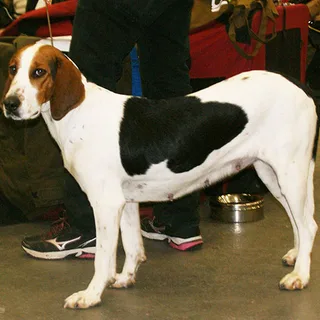
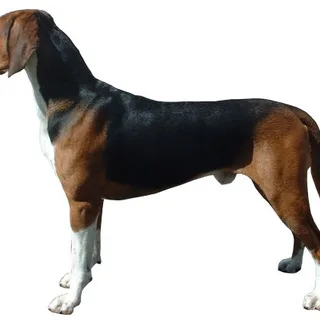
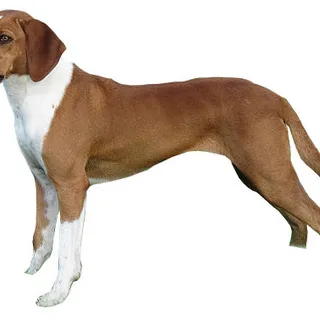
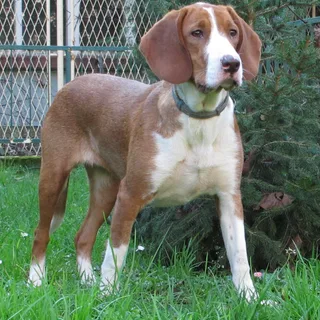
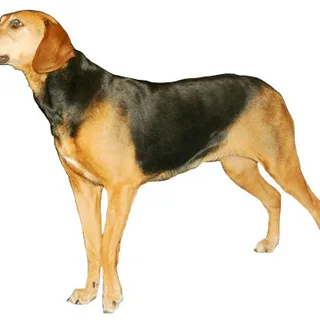
The Slovak Hound is a medium-sized hunting dog, robust and inscribable in an elongated rectangle. Its neck, short and muscular, is inclined at about 135 degrees. The body is straight and moderately long, with a fairly broad and solid loin, a rounded croup, a broad and full chest, arched ribs and a slightly tucked-up belly. Its head is long, with a pronounced stop, a large black nose, a straight muzzle and robust jaws. Its dark almond-shaped eyes express liveliness and courage. Its ears, set low, hang flat against the head and are rounded at their tip. The tail, set low, hangs at rest and curves in a sabre shape when the dog is alert. Its 2 to 5 cm coat is moderately thick, dense and lying close, with a dense undercoat. The coat is black with brown to mahogany tan markings on the limbs.
Temperament
Temperament and personality
Lively, enduring and determined, the Slovak Hound has solid hunting qualities. When it follows a trail, it frequently gives voice and relies on a remarkable sense of orientation. Its natural bite explains its traditional use for hunting wild boar and carnivorous game. It can be affectionate with its family, while retaining a working dog's temperament.
Living together
Living with children and animals
The Slovak Hound is an active dog that needs a lot of exercise every day. Long outings allow it to burn off energy and be stimulated on physical and sensory levels. It prefers a setting close to nature, with a large fenced garden, to an urban environment. Apartment living suits it poorly and its strong vocality must be taken into account on a daily basis.
Training
Training and socialization
Its training must be early, firm, balanced and free of brutality. Its natural biting tendency must not be encouraged, as it could become problematic in the presence of other animals. The breed is not particularly complicated to manage when its owner is experienced, consistent and able to offer it enough activity.
Budget
Slovakian Hound price & budget
The purchase price varies depending on the kennel, the bloodline, the pedigree and the dog's intended use. You must also anticipate recurring expenses related to food, veterinary care, parasite prevention and equipment intended for outdoor activities.
View cost breakdownHealth
Health at a glance
The Slovak Hound is known for its robust health and the reference sheet does not indicate any particular predisposition to a disease. Regular veterinary monitoring remains necessary to preserve its condition, especially in this active dog and often exposed to natural terrain.
Prevention & watch pointsDiet
Feed it well
The Slovak Hound needs a balanced, high-quality diet, adapted to its age, size and level of physical activity.
Our feeding adviceDid you know?
Anecdotes and popularity
The Chien courant slovaque is also called Slovenský kopov or Slovakian Hound. It is listed by the FCI under number 244 and recognized since 1963. A litter generally has 3 to 6 puppies. Its gait may recall that of a Dachshund with longer legs.