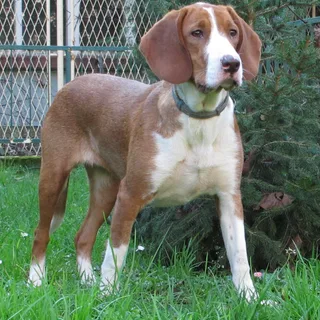
A menu for every age
Needs change over time
All ages : Adapt the richness and the quantity of the ration to the age, size and level of physical activity.
Which food?
Kibble, wet food, or home-cooked diet?
A complete, high-quality diet must cover its energy expenditure, particularly when it regularly practices hunting or a sporting activity.
Amounts
How much should you give?
The daily amount must be adjusted to its age, its size and its level of physical activity.
| Weight | Daily amount | Meals/day |
|---|---|---|
| 18 - 21 kg | 344 - 472 g | 2 |
| 21 - 25 kg | 362 - 497 g | 2 |
| 25 - 28 kg | 408 - 560 g | 2 |
Change
Managing the food transition
Any change in diet must be carried out gradually over about one week in order to limit digestive upsets, by gradually increasing the proportion of the new food.
Hydration
Water: do not overlook it
Clean, fresh water must remain available at all times, with increased vigilance after hunting, a long outing or in hot weather.
Little extras
Treats, in moderation
Treats can support training and recall, but they must remain occasional and be deducted from the daily ration in order to avoid an excess of calories.
Good habits
For a top-notch bowl
- Choose a balanced, rich and high-quality diet.
- Adjust the ration to daily physical expenditure.
Never give
Chocolate, grapes and raisins, onion, garlic in large quantities, xylitol, alcohol, caffeine, macadamia nuts and cooked bones are dangerous for the dog and can cause poisoning, digestive lesions or choking.