Origins
Where does it come from?
The development of the Bosnian Hound dates back to the end of the 19th century from local dogs crossed with a hunting dog of Italian origin. Contributions from the Istrian Shorthaired Hound and the Saint Hubert Hound are also mentioned in the history of the breed. Registered with the FCI in 1965 under the name Illyrian Hound, it then took the name Bosnian Rough-haired Hound, known as Barak. Today it remains a rare breed outside its region of origin.
Appearance
What does it look like?
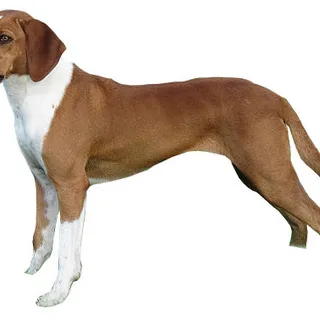
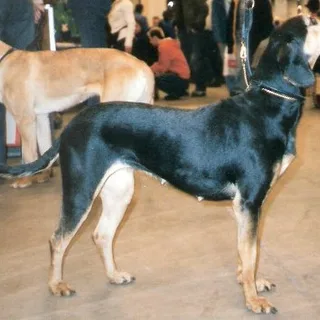
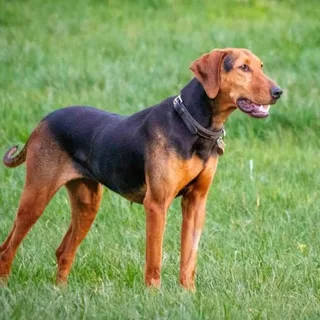
The Bosnian Hound is a medium-sized dog, solid and harmonious, with a rather elongated head, medium-length drooping ears and oval chestnut-colored eyes. Its coat is long, harsh, shaggy and tousled, with an abundant undercoat that protects it well from bad weather. The coat can be bicolored or tricolored, in yellow-red, earth gray or blackish tones, sometimes with white markings on the head, chest, limbs or the tip of the tail.
Temperament
Temperament and personality
Lively, courageous and persistent, the Bosnian Hound is above all an enduring hunting dog, capable of working on difficult terrain and on various game. With the family, it shows itself attached to its owners and pleasant to live with, while keeping a certain reserve towards strangers. Its hunting instinct remains pronounced and must be taken into account on a daily basis.
Living together
Living with children and animals
This dog needs to stay active to feel good in its paws. It enjoys long walks, regular outings in the great outdoors and activities that engage its sense of smell and its endurance. If it gets enough exercise, it can adapt to a more urban life, but it thrives more in an environment offering space and opportunities to expend energy.
Training
Training and socialization
The training of the Bosnian Hound must be firm, consistent and fair, without brutality. It is important to teach it very early the rules of life, recall and the management of its tracking-related impulses. Serious socialization and regular work give good results, even if its hound temperament can sometimes make it independent.
Budget
Bosnian Coarse-haired Hound price & budget
The Bosnian Hound remains a fairly rare breed, which can limit availability depending on the countries and periods. The purchase price depends mainly on the seriousness of the breeding, the origin of the breeding stock, and the actual availability of puppies.
View cost breakdownHealth
Health at a glance
The Bosnian Hound is generally considered a robust and hardy breed. Its solid build and protective coat allow it to cope well with outdoor conditions, provided it benefits from normal veterinary follow-up and a lifestyle consistent with its activity needs.
Prevention & watch pointsDiet
Feed it well
The Bosnian Hound needs a complete, high-quality diet, suited to its medium size, its age and above all its activity level. A dog used for hunting or very active will not have the same needs as an individual living mainly as a companion.
Our feeding adviceDid you know?
Anecdotes and popularity
This breed is also known under the names Barak, Bosnian Rough-haired Hound and formerly Illyrian Hound. Its current name highlights its Bosnian roots and the characteristic texture of its coat, well suited to the terrain and climatic conditions of its region of origin.