Origins
Where does it come from?
The versatility of the German Longhaired Pointer comes from the contributions of several types of hunting dogs, notably Oysel dogs, water dogs, hawk dogs and brachets. The first structured breeding programs began around the end of the 19th century. The work of Baron von Schorlemer then served as the basis for the development of the current breed standards.
Appearance
What does it look like?
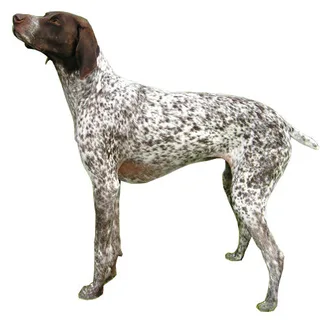
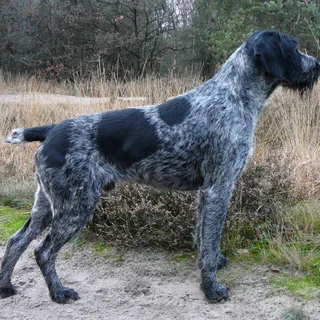
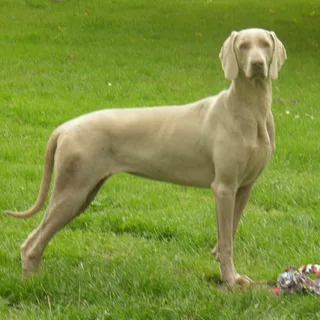
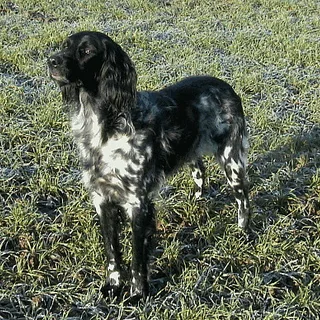
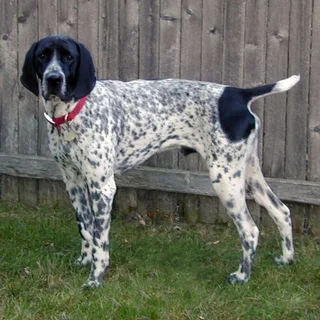
Solidly built without appearing heavy, the German Longhaired Pointer combines musculature, substance and elegance. Its head is elongated, with a slightly domed skull, dark brown eyes and drop ears richly fringed. Its back is straight and solid, its chest broad and well let down, and its tail is carried horizontally with the last third slightly raised. Its topcoat, 3 to 5 cm long on the body, is dense, firm, shiny, smooth or slightly wavy, with a developed undercoat. The coat can be solid brown, brown with white markings or speckling, dark or light roan, or ticked.
Temperament
Temperament and personality
Balanced, calm and affectionate, the German Longhaired Pointer is very attached to its owner and its family. When hunting, it stands out for its great versatility and can work on open ground, in marshland as well as in covered terrain, before and after the shot. Its hunting instinct is pronounced, while its protective temperament remains moderate.
Living together
Living with children and animals
On a daily basis, this dog enjoys an active life, long outings and regular activities. Despite his calmness at home, he needs to exercise sustainably and prefers natural environments offering large open spaces. He can adapt to the city if his needs for outings and stimulation are fully met. Two long daily walks are recommended.
Training
Training and socialization
Rather obedient for a hunting dog, the German Longhaired Pointer is generally easy to train with a consistent and respectful method. Its attachment to its owner, its calmness and its taste for work make learning easier. Early socialization and regular recall training are particularly important due to its strong hunting instinct.
Budget
German Longhaired Pointer price & budget
The purchase price varies notably depending on the lineage, the reputation of the breeding kennel, the health screenings carried out and the dog's intended purpose, companionship, work or show.
View cost breakdownHealth
Health at a glance
The German Longhaired Pointer is a robust dog, with generally solid health and no major predisposition reported as systematic. Orthopedic and ear monitoring nevertheless remains recommended.
Prevention & watch pointsDiet
Feed it well
The German Longhaired Pointer needs a balanced, high-quality diet, adapted to its age, its size and its level of physical activity.
Our feeding adviceDid you know?
Anecdotes and popularity
The breed is also known under the names Langhaar, Deutsche Langhaar and German Longhaired Pointer. It bears the FCI standard number 117 and has been recognized by the FCI since 1954. A litter usually has 4 to 6 puppies according to the reference sheet.