Origins
Where does it come from?
The origins of the Braque de Weimar remain partly uncertain. A tradition traces them back to a pack of grey dogs that Louis IX is said to have brought back from Palestine, without proof to confirm this lineage. Its presence in Germany is mentioned as early as the 15th century and the Grand Duke Karl-August of Saxe-Weimar is said to have owned, in the 17th century, a grey pointing dog used for hunting wolf, wild boar and fox. Crossbreeding with other breeds ends in 1890, which makes it the oldest pointing dog originating from Germany. The long-haired variety appears in the 20th century. The breed, also called Weimaraner, bears the FCI number 99 and has been recognized by the FCI since 1954.
Appearance
What does it look like?
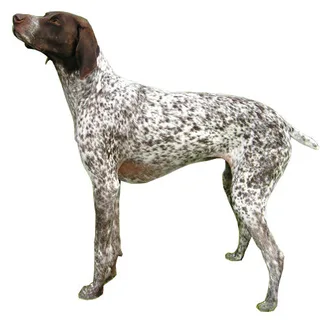
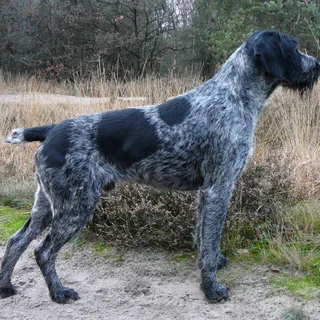
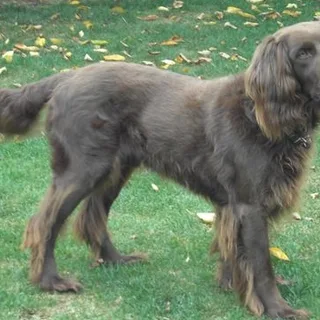
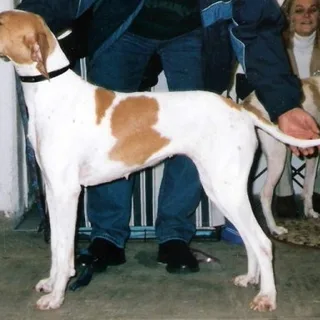
Medium to large in size, the Weimaraner Pointer has an athletic, slender and muscular silhouette, with a long and firm body. Its head, proportionate to the body and finer in the female, has a slightly marked stop, a large nose and an elongated muzzle. Its broad, long ears, set high, reach the corner of the lips. Its eyes, rounded and slightly oblique, are blue until about six months and then become amber. The coat is generally short, harsh and very thick, but there is also a long-haired variety. The coat always comes in shades of grey, notably mouse grey, silver grey or dark grey. The tail is powerful and carried rather low.
Temperament
Temperament and personality
Very affectionate and strongly attached to its owner, the Weimaraner is an action dog with marked energy. Intelligent, playful and endowed with a remarkable sense of smell, it excels at hunting and readily adapts to sporting activities. It enjoys games with children and can be wary of strangers. Its hunting instinct requires careful socialization with other animals.
Living together
Living with children and animals
The Weimaraner does not tolerate inactivity and long periods of confinement well. It needs more than two hours of daily walking, with the possibility to run and use its sense of smell. Apartment living remains possible if outings are numerous, long and active, but a house with a yard or garden, ideally in the countryside, suits it better. Games, agility, obedience, canicross and search activities meet its needs well.
Training
Training and socialization
His training must begin early and combine firmness, consistency and kindness. Very intelligent but sometimes stubborn, the Braque de Weimar must quickly learn the rules of the house, recall and frustration management. His strong attachment also requires a gradual learning of being alone in order to prevent boredom and undesirable behaviors. Short, varied and stimulating exercises make the best use of his abilities.
Budget
Weimaraner price & budget
The purchase price depends in particular on the breeding kennel, the pedigree, conformity to the standard, the lineage and the dog's intended purpose. The annual maintenance budget reported by the source is between 1 450 and 1 550 euros, excluding exceptional veterinary expenses.
View cost breakdownHealth
Health at a glance
The Braque de Weimar is generally robust and does not present any major widespread health problem. Particular vigilance remains necessary in the face of the risk of gastric torsion and several possible hereditary conditions. Vaccinations, parasite prevention and veterinary check-ups must be kept up to date, especially in dogs involved in competitions, hunting or work missions.
Prevention & watch pointsDiet
Feed it well
Its diet must meet the needs of a very active large dog while limiting factors that promote gastric dilatation-volvulus. The daily ration is divided into two meals served at regular times and adapted to the actual energy expenditure.
Our feeding adviceDid you know?
Anecdotes and popularity
The Braque de Weimar is also known by its German name, Weimaraner. Its eyes change color during growth: blue at birth and during the first months, they then take on an amber shade. Its sense of smell allows it to search for game as well as people, which explains its possible use in search or assistance missions.