Origins
Where does it come from?
The Poodle is an ancient breed officially attached to France, stemming from a base of European water dogs used for retrieving water game. Its name moreover evokes its work in water, and the breed gradually won over salons and then homes thanks to its intelligence, its ease of learning and its refined appearance. Over time, the same type was developed into four size varieties - standard, medium, miniature and toy - without losing its lively temperament or its remarkable aptitude for companionship.
Appearance
What does it look like?
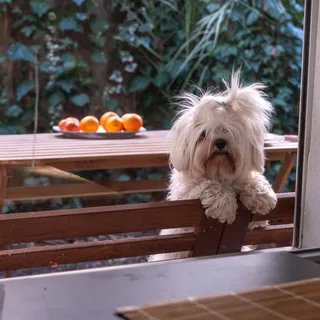
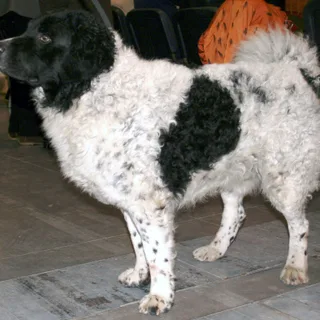
The Poodle presents a harmonious silhouette, well proportioned and active, with a fine head, a very expressive look and well set drop ears. Its coat is abundant, dense and curly, sometimes corded, with a characteristic woolly texture that grows continuously. The breed exists in four sizes, from the toy of about 24 to 28 cm to the standard poodle which can reach 60 cm, which explains a significant range of height and weight while retaining the same overall elegance.
Temperament
Temperament and personality
The Poodle is a very intelligent, attentive dog and close to its family. It learns quickly, reads human intentions well and generally shows itself to be playful, sensitive and eager to take part in household life. Depending on its socialization and size, it can be more or less outgoing, but it usually keeps an alert, affectionate and cooperative temperament.
Living together
Living with children and animals
On a daily basis, the Poodle likes to be included in household activities, go out regularly, observe and solve small challenges. It often tolerates city life as well as life in a house, provided it is not reduced to a decorative role. Lacking presence, exercise or mental stimulation, it can become vocal, restless or develop annoying habits such as excessive attention-seeking.
Training
Training and socialization
The education of the Poodle is generally very rewarding, because the breed combines quick-wittedness, memory and a desire to cooperate. The best results come from short, varied and positive sessions, with stable rules, early socialization and real work on independence. Its sensitivity makes harsh methods counter-productive, whereas a clear and caring framework often makes it possible to obtain a reliable dog that is very pleasant in everyday life.
Budget
Poodle price & budget
The purchase price of the Poodle depends mainly on the size variety sought, the quality of the lineage, the screenings carried out on the breeding dogs, the reputation of the kennel and the puppy’s level of socialization. The most sought-after small sizes can command high prices, but the breed’s overall budget is not limited to the purchase price. Coat maintenance, preventive care and, depending on the size, food costs must be factored in from the start.
View cost breakdownHealth
Health at a glance
The Poodle is overall a fairly robust and often long-lived breed, especially when it comes from serious selection and benefits from regular preventive monitoring. The points of vigilance nevertheless vary depending on the size of the dog, with frequent attention to the eyes, ears, teeth and certain orthopedic or endocrine conditions. In the Standard Poodle, the hips and the digestive risk of gastric dilatation-volvulus are also monitored more closely.
Prevention & watch pointsDiet
Feed it well
The Poodle benefits from a complete, digestible and well-balanced diet, adjusted to its age, its size, its activity and its body condition. As the breed covers very different sizes, the needs of a sedentary toy, a companion miniature or a sporty standard poodle are not managed in the same way. The goal remains to support muscle mass, coat quality and digestive health without promoting overweight.
Our feeding adviceDid you know?
Anecdotes and popularity
The Poodle is often reduced to its grooming aesthetics, whereas it is originally an authentic sporting and enduring water dog. It is also one of the rare breeds recognized in four size varieties, from toy to the standard poodle, without any change in fundamental type. Its versatility explains its presence both as a companion and in obedience, in agility, in animal-assisted therapy or in certain assistance roles.