Origins
Where does it come from?
The Portuguese Shepherd, also known as the Serra de Aires Dog, originates from Alentejo, in southern Portugal. Its ancestors accompanied local shepherds in the mountains of the Serra de Aires, a region marked by cold and windy winters and hot and dusty summers. Selected to drive and guard varied herds, notably sheep, cattle, horses and pigs, it distinguished itself by its intelligence, frugality and endurance. The Fédération Cynologique Internationale definitively recognized the breed on 16 November 1954.
Appearance
What does it look like?
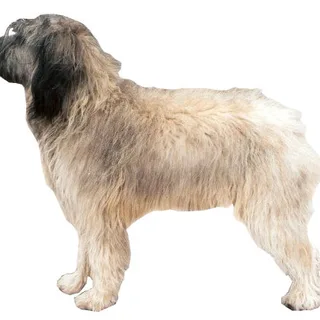
The Portuguese Shepherd is a medium-sized dog, rustic and agile, whose body is slightly longer than tall. Its strong head without being massive has an almost square skull, a well-marked stop and medium, rounded eyes, hazel to dark amber in color. Its triangular ears are set high and hanging. Its long, dense coat without undercoat is smooth to slightly wavy, with a harsh texture reminiscent of goat hair. The hair forms a characteristic beard, moustache and eyebrows. Accepted colors include in particular grey, fawn, charcoal fawn, brown, yellow and black. Its long, well-furnished tail reaches the hock.
Temperament
Temperament and personality
Extremely loyal to its owner, the Portuguese Shepherd is attentive, skilful and enthusiastic at work. Its protective instinct is strong and it is naturally wary of strangers. Very intelligent, it learns quickly and enjoys cooperating with a consistent person. It is also an athletic companion that seeks activity, interactions and useful tasks. Early socialization helps to channel its reserve and to encourage calm relationships with children and other animals.
Living together
Living with children and animals
On a daily basis, the Portuguese Shepherd needs to exercise frequently and to use its intelligence. It prefers to have space, ideally a large fenced garden, but this does not replace walks, training work and shared activities. It can excel in agility, obedience and in disciplines that draw on its herding abilities. A life that is too sedentary or long periods without occupation may harm its physical and mental balance.
Training
Training and socialization
His training must begin early and combine firmness, consistency and positive methods. His intelligence, his thirst for learning and his taste for play make him a receptive student, but his energy and his working-dog temperament require a clear framework. Short, varied and regular sessions are particularly suitable. Socialization must be carried out from the youngest age in order to get him used to people, animals, environments and everyday situations.
Budget
Portuguese Sheepdog price & budget
The purchase price varies depending on the lineage, the quality of the selection, health guarantees, identification and the reputation of the breeding kennel. You should also plan for the annual maintenance budget, estimated by the source at between 1 050 and 1 150 euros, excluding major unforeseen veterinary expenses.
View cost breakdownHealth
Health at a glance
The Portuguese Shepherd is described as a hardy and robust dog, with good resistance to the harsh climatic conditions of its region of origin. No particular health problem is reported as a major characteristic of the breed. As with any active dog, regular veterinary follow-up, an appropriate diet and monitoring of the musculoskeletal system remain important.
Prevention & watch pointsDiet
Feed it well
The Portuguese Shepherd can be fed with high-quality kibble suited to its age, its weight and its activity level. Its ration must support its significant energy expenditure without leading to weight gain. The quantities should be adjusted according to its body condition and the recommendations of the manufacturer or the veterinarian.
Our feeding adviceDid you know?
Anecdotes and popularity
In its region of origin, the Portuguese Shepherd is sometimes nicknamed "monkey-dog" because of its appearance, its agility, its speed and its way of moving. Despite its common name, it did not guard only sheep: it was also used with cattle, horses and pigs.