Origins
Where does it come from?
The Korat is an ancient breed originating from Thailand, more precisely from the Korat region from which it takes its name. In its country of origin, it is traditionally associated with prosperity and good luck. This blue cat with silvery highlights became known outside Asia from the middle of the 20th century, first in the United States and then in Europe. Today it remains a relatively rare breed, sought after for its natural elegance and its temperament deeply attached to its family.
Appearance
What does it look like?
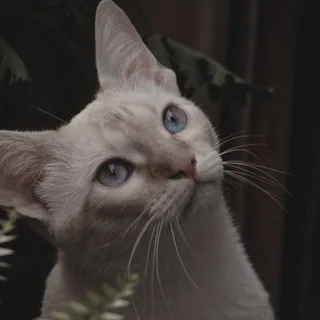
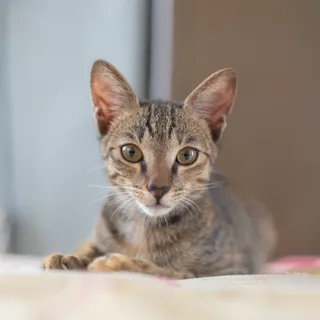
The Korat is a medium-sized cat, muscular and harmonious, which gives an impression of power without heaviness. Its heart-shaped head, its large ears, its very expressive round eyes and its silver-blue coat are its distinctive signs. Its coat is short, fine, smooth and satiny, with silvery highlights particularly visible in the light. Its supple body, its well-open chest and its medium-length tail complete a silhouette that is both graceful and solid.
Temperament
Temperament and personality
The Korat is a calm, gentle and very affectionate cat with those close to him. He likes the company of his family and often forms a strong bond with his reference human. Sensitive to the atmosphere of the home, he prefers peaceful environments to noisy or very hectic households. Curious and intelligent, he remains observant, sometimes reserved with strangers, but deeply loyal once he feels confident.
Living together
Living with children and animals
Rather home-loving, the Korat appreciates the comfort of a quiet indoor environment where it can alternate rest, observation and moments of play. It likes petting and closeness without being constantly restless. It generally tolerates other animals well when they respect its space, and can live with calm children. Its level of vocalizations remains moderate, but it knows how to communicate gently when it wants attention.
Training
Training and socialization
The Korat responds well to a calm, consistent education based on trust. Its sensitivity requires avoiding harsh methods, which could make it wary. With stable habits, suitable enrichment and positive encouragement, it easily learns the rules of the house, the use of accessories and small daily routines. Early socialization also helps to better manage its natural reserve in the face of noise and strangers.
Budget
Korat price & budget
The Korat is a rare breed, which explains a purchase price often higher than that of more common cats. The price mainly depends on the seriousness of the breeding, the lineage, the socialization work and the health tests carried out on the breeding cats. It is better to favor a transparent and rigorous breeder rather than an abnormally low offer.
View cost breakdownHealth
Health at a glance
The Korat is generally a sturdy cat and is known for its great longevity. When it comes from a reputable breeding program, it often enjoys overall satisfactory health and a long life. As with any cat, regular veterinary follow-up, vaccination prevention, weight control and a calm environment play an important role in maintaining its fitness.
Prevention & watch pointsDiet
Feed it well
The Korat needs a complete, digestible and well-balanced diet, adapted to its age, any possible neutering and its activity. A good-quality ration helps preserve its silhouette, its muscle mass and the beauty of its coat. As it can live a long time, nutrition must evolve carefully over the years.
Our feeding adviceDid you know?
Anecdotes and popularity
The Korat is also known as Si-Sawat in Thailand. In Thai tradition, it is considered a lucky cat and for a long time was given as a good-luck gift rather than bought. Its silver-blue coat and bright green eyes contribute to its very distinctive image, and its rarity still contributes today to its particular aura among feline breeds.