Origins
Where does it come from?
Present for a very long time in Spain, notably in Andalusia where it is more common, the Spanish Water Dog was traditionally called "Turkish dog". It shares common origins with the ancient Barbet. Appreciated as a herding dog, it is also used as a hunting partner for water game in the marshes and as an auxiliary for fishing. The breed, registered under number 336, has been recognized by the FCI since 1999, as well as by the AKC, the ANKC, the CKC, the UKC, the KC and the NZKC.
Appearance
What does it look like?
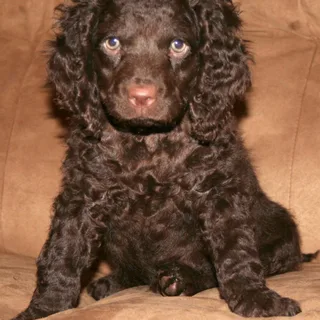
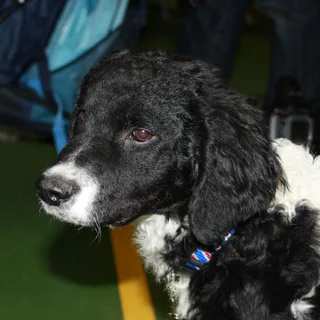
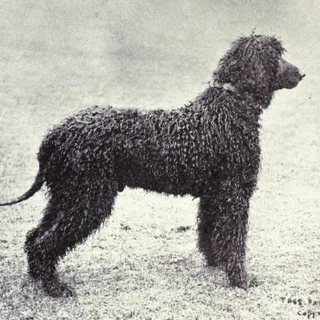
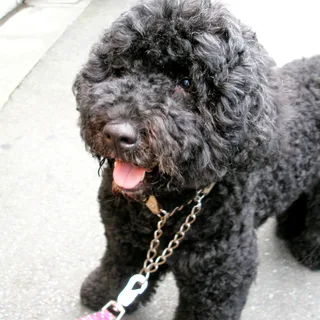
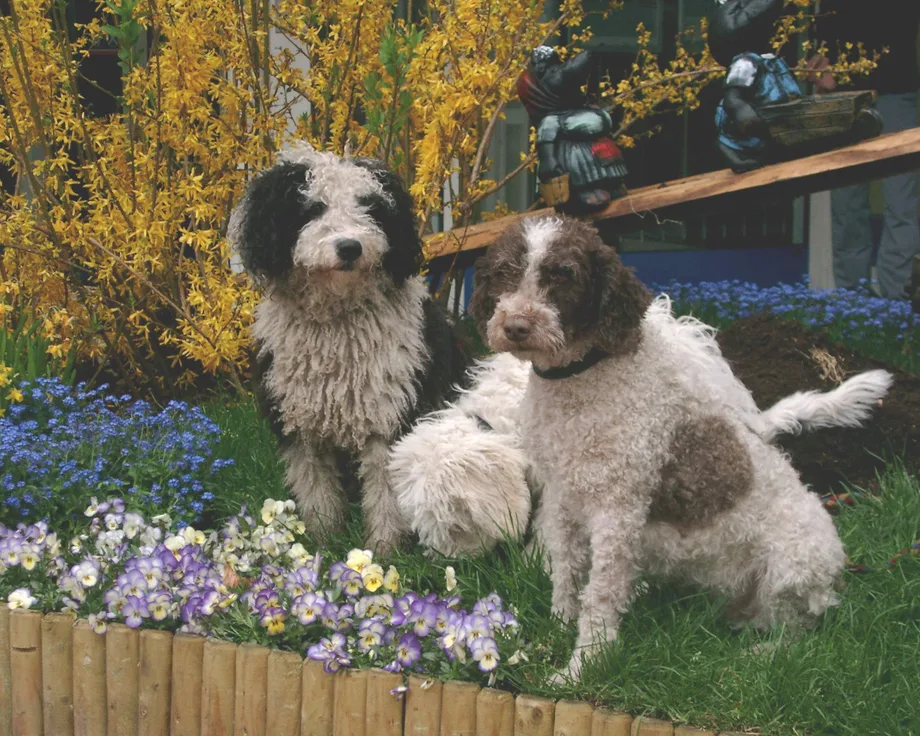
The Spanish Water Dog is a medium-sized dog, rustic, well-proportioned, harmoniously built, athletic and endowed with good musculature. Its body is solid, with a straight topline, a slightly marked withers, a straight and strong back, a slightly sloping croup, a broad chest, well-sprung ribs and a slightly tucked-up belly. Its powerful head is elegantly carried, with a flat skull, a slightly marked stop, a straight profile and a nose of the coat color or darker. Its triangular, drop ears are set moderately high. Its very expressive eyes, slightly oblique, range from hazel to brown. Its tail is set moderately high and may be naturally short. Its curly, woolly coat can form large cords when it is long. The coat is solid white, black or brown, or bicolor white and black or white and brown.
Temperament
Temperament and personality
Versatile, loyal, docile, cheerful and attentive, the Spanish Water Dog combines the abilities of a herding dog, a hunting dog and a fishing dog. He is always ready to work and stands out for remarkable learning and adaptation abilities. He is affectionate with his family, rather not very independent and moderately protective, but his hunting instinct is pronounced.
Living together
Living with children and other pets
Active and playful, the Spanish Water Dog needs long, frequent outings and regular stimulation. Its sociability with other animals is average and it tends to be rather reserved with strangers. Its relationship with children requires careful socialization and supervised interactions. It vocalizes moderately.
Training
Training and socialization
Obedient, intelligent and eager to learn as well as to please its owner, the Spanish Water Dog has good training abilities. Its education must combine a minimum of firmness with a lot of gentleness, without brutality or lack of boundaries.
Budget
Price and budget for the Spanish Water Dog
The purchase price varies depending on the breeder, the line, the pedigree, the age and the dog's intended use. The annual maintenance budget is generally around 1,200 to 1,300 euros, including food and veterinary follow-up.
See cost breakdownHealth
Health at a glance
The Spanish Water Dog is robust and generally enjoys good health. Its coat protects it quite well from moisture and harsh weather conditions. No particular predisposition to a disease is reported for this breed.
Prevention and things to watch forNutrition
Feeding your pet well
The Spanish Water Dog needs a balanced, high-quality diet, adapted to its level of physical activity, its size and its age.
Our feeding adviceDid you know?
Fun facts and popularity
The Spanish Water Dog is also known under the names of Turkish Dog, Perro de Agua Español, Spanish Water Dog and Spanish Water Spaniel. Its historical versatility has enabled it to work as a herding dog, a hunting assistant for waterfowl and a partner of fishermen. A litter generally includes 4 to 6 puppies.