Origins
Where does it come from?
The origins of the Småland Hound are located in the Swedish province of Småland, in the south of the country. The breed comes from old crossbreeds between local farm dogs and hounds coming notably from England, Germany, Poland and the Baltic countries, introduced upon the return from the military campaigns of the 17th century. It was first developed for hare and fox hunting, before its type was gradually fixed at the beginning of the 20th century and then recognized by the FCI in 1955.
Appearance
What does it look like?
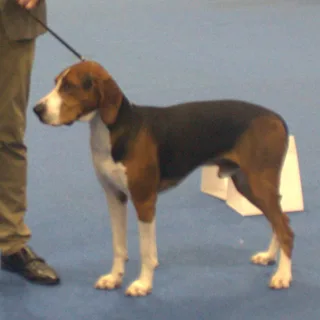
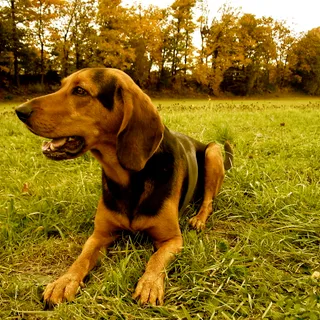
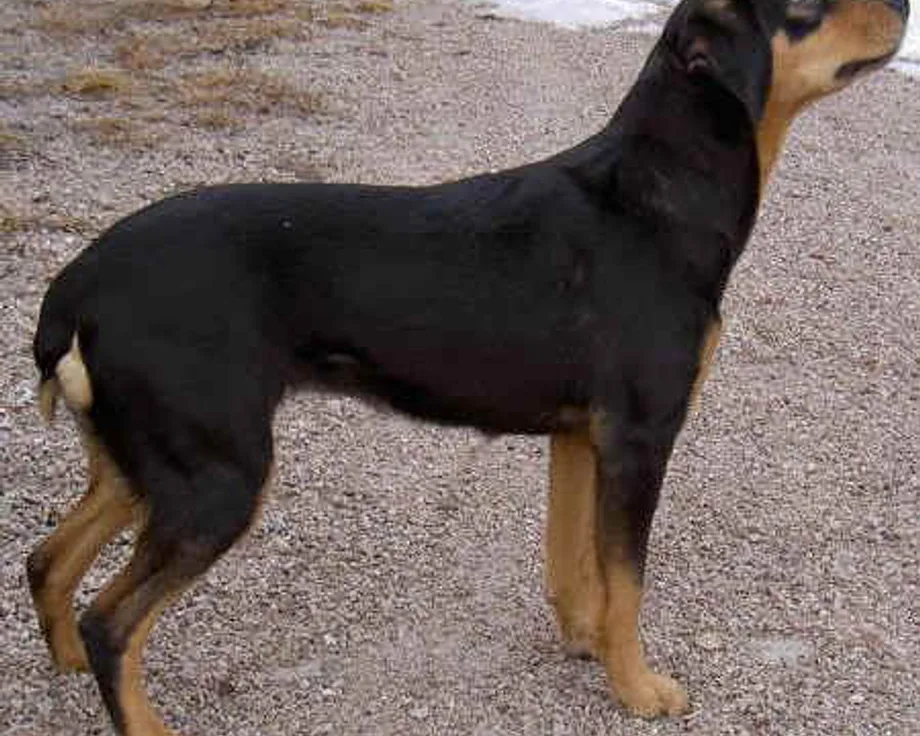
The Småland Hound is a medium-sized dog, robust in its build but elegant in its appearance. Its body is almost inscribable in a square, with a strong neck, a well-marked withers, a short back and well-developed musculature. Its coat is medium-long, harsh as a topcoat and combined with a short, dense and soft undercoat. The coat is black or brown with tan markings, the ears are pendant and rounded, and the overall expression remains calm and attentive.
Temperament
Temperament and personality
Calm without being sluggish, the Småland Hound combines affection, liveliness and great loyalty to its owner. It is a well-balanced companion, close to its family, yet it retains the temperament of a true hunting dog. It enjoys activity, knows how to be pleasant on a daily basis and remains particularly attached to the relationship with its main handler.
Living together
Living with children and other pets
On a daily basis, this dog needs long, frequent outings to express its energy and its tracking instinct. It tends to be vocal, a quality useful for hunting but which can become constraining in an urban environment. It tolerates the cold fairly well thanks to its double, dense coat, and thrives more in a house with a fenced garden than in a small home.
Training
Training and socialization
The Småland Hound responds better to positive, consistent and regular training than to harsh methods. Its desire to please helps progress, but its scent hound profile requires working very early on recall and the management of olfactory distractions. Motivation through reward and varied sessions generally give the best results.
Budget
Price and budget for the Småland Hound
The price of a Småland Hound varies depending on the lineage, the seriousness of the breeding, the screenings and the socialization. The maintenance budget (food, veterinary, training) often exceeds the purchase price over time.
See cost breakdownHealth
Health at a glance
The Småland Hound is generally considered a robust breed. Reference sources do not report any specific frequent hereditary disease associated with the breed, which makes it a rather hardy dog when it benefits from an appropriate lifestyle, regular veterinary follow-up and good physical condition.
Prevention and things to watch forNutrition
Feeding your pet well
Like all active dogs, the Småland Hound needs a complete and balanced diet, providing quality proteins, vitamins and minerals in appropriate amounts. Its diet must support exertion without promoting overweight.
Our feeding adviceDid you know?
Fun facts and popularity
The breed bears the name of its province of origin in Sweden. Some individuals may have a naturally shorter tail, a characteristic accepted in the standard. Long selected for small game rather than for pack work or hunting big game, it has retained the profile of a versatile and independent hunting dog.