Origins
Where does it come from?
The Singapura originates from Singapore, where its ancestors lived in a semi-stray state in the streets. The breed was introduced to the United States in the 1970s by Hal and Tommy Meadows, then gradually established and recognized by the main American feline federations in the 1980s. Still not very widespread in Europe, it remains a rare breed appreciated for its small size, its elegance and its pleasant temperament.
Appearance
What does it look like?
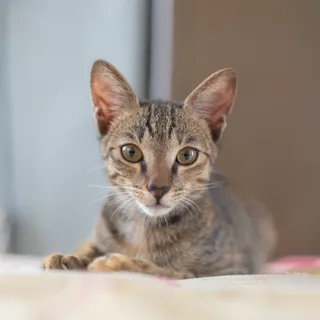
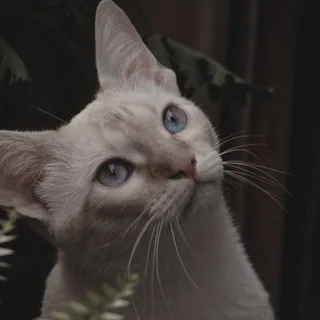
The Singapura is a very small cat with a compact and muscular body, with a fine bone structure and an elegant silhouette. Its head is rounded, its ears are large and open, and its walnut-shaped eyes are large and very expressive. Its coat is short, fine and silky, without undercoat, warm ivory in color with dark brown to black ticking, characteristic of the sepia ticked tabby pattern.
Temperament
Temperament and personality
The Singapura is a very affectionate, calm cat that stays close to its home. It readily seeks attention, petting and the presence of its humans, while keeping a fine curiosity. Balanced and not very conflict-prone, it is pleasant on a daily basis and adapts well to family life as well as to a more peaceful environment.
Living together
Living with children and animals
This cat enjoys indoor life, where it feels safe and readily takes advantage of a cat tree, observation points and moments of rest. It can go from a long phase of relaxation to episodes of play and exploration, without being hyperactive. On the other hand, it does not tolerate overly long absences well and prefers to live close to its humans.
Training
Training and socialization
The Singapura responds well to a gentle, consistent education based on repeating simple routines. Without being a particularly demanding cat to educate, it makes better progress in a calm setting, with positive reinforcement and regular interactions. Early socialization and stable habits promote a cat that is comfortable in its paws.
Budget
Singapura price & budget
The Singapura is a rare breed, which influences its purchase price. The price mainly depends on the quality of the breeding, the lineage, compliance with the standard, and the still limited availability of the breed.
View cost breakdownHealth
Health at a glance
The Singapura is overall a robust cat, with no major hereditary predisposition clearly established in the references consulted. Its main point of vigilance concerns its sensitivity to cold and drafts, due to its short coat and the absence of an undercoat. As with any cat, regular veterinary follow-up and serious vaccination prevention remain essential.
Prevention & watch pointsDiet
Feed it well
The Singapura needs a high-quality diet, rich in animal proteins and adapted to its physiological status. Its small size should not make one forget the importance of a well-balanced ration, given regularly and adjusted to its activity level.
Our feeding adviceDid you know?
Anecdotes and popularity
The Singapura is often cited among the smallest domestic cats in the world. Despite its small size, it gives an impression of presence thanks to its large ears, expressive eyes and its very elegant ticked coat. Its rarity in Europe also contributes to its image as a discreet and sought-after breed.