Origins
Where does it come from?
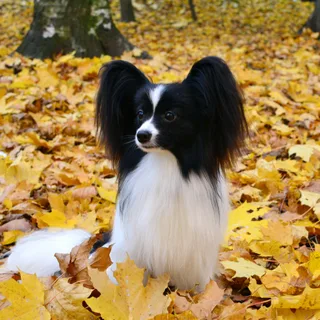
The Russkiy Toy, or little Russian dog, descends from English toy terriers imported into Russia at the beginning of the 20th century, then locally selected after the near-disappearance of foreign lines. Two coat varieties became established: smooth coat and long coat, the latter recalling the Papillon a little with its fringes. The breed has been recognized by the FCI and today appeals to lovers of elegant toy dogs. In France, it remains less widespread than the Chihuahua or the Yorkshire.
Appearance
What does it look like?
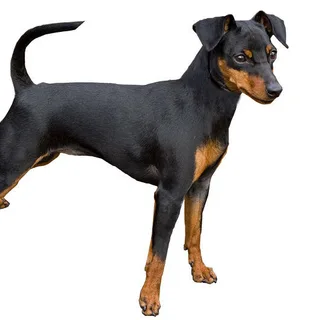
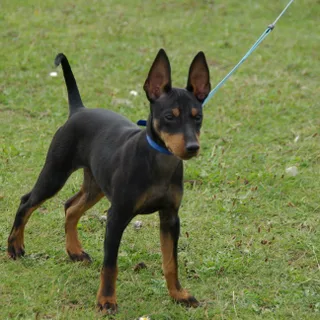
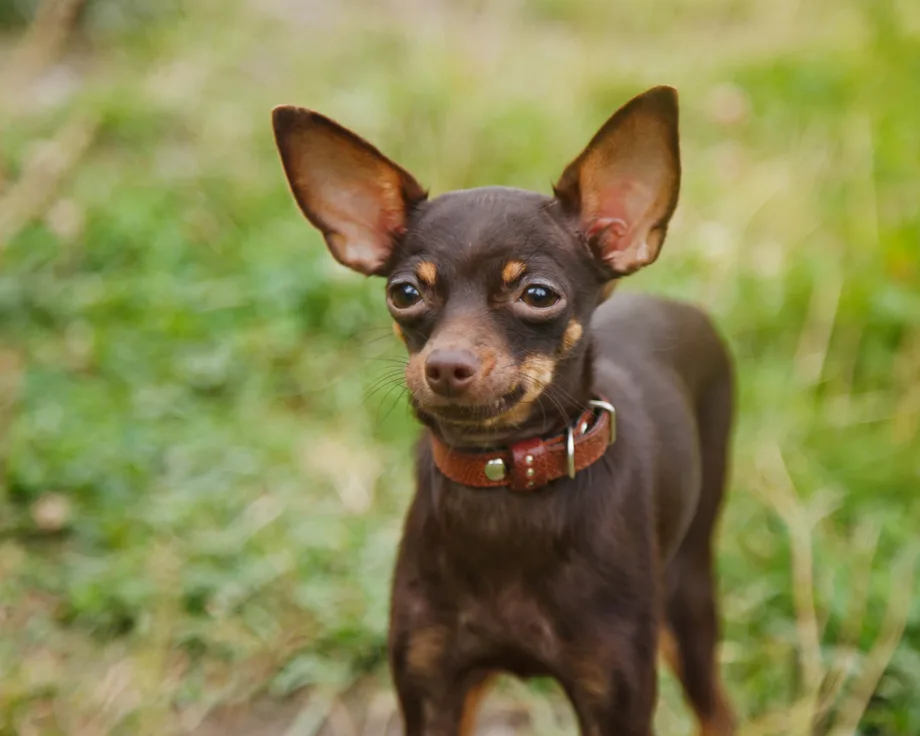
It is a toy dog, fine and long-legged, with an almost square format. The head is small, the stop pronounced, the eyes round and expressive, the ears large and erect. The smooth coat is short and shiny; the long coat has fringes on the ears and limbs. The coats are solid or marked, often black and tan, brown, fawn or red. The weight rarely exceeds 3 kg.
Temperament
Temperament and personality
Lively, curious and very focused on his owner, he can be possessive if he is not well socialized. He likes to play, observe and comment on the noises in the building. With calm children, he is affectionate; with games that are too rough, he becomes fragile. This is not a dog for permanent outdoor living.
Living together
Living with children and other pets
Perfect for an apartment, he still needs outings, games and a real education. He can bark easily if you let him control everything. Excessive heat, damp cold and jumps from the sofa require supervision. He lives better as a single companion very close than as a forgotten dog.
Training
Training and socialization
Despite its size, it must learn the same rules as a large dog: house-training, silence, handling, gradual time alone. Short, playful sessions work well. Avoid carrying it all the time, otherwise it learns neither the ground nor calm. Gentle socialization with other dogs prevents aggressive fear.
Budget
Price and budget for the Russian Toy
A companion Russkiy Toy from a well-monitored breeding program is often priced between 1 200 and 2 200 euros. The relative rarity and the work on two coat varieties influence the price.
See cost breakdownHealth
Health at a glance
Like many toy breeds, it may present dental, patellar and sometimes neurological fragilities. The choice of a breeder who refuses subjects that are too extreme and too light is decisive. Early dental monitoring clearly improves comfort.
Prevention and things to watch forNutrition
Feeding your pet well
The Russkiy Toy needs a complete, digestible diet adjusted to its age, its activity and its body condition. Protein quality and control of energy intake matter as much as the volume of the ration.
Our feeding adviceDid you know?
Fun facts and popularity
It is also called Russian Toy Terrier or Moscovian Miniature. The long-haired variety was consolidated in the 1950s in Moscow. Its show elegance must not make one forget that it remains a dwarf terrier, alert and sometimes noisy.