Origins
Where does it come from?
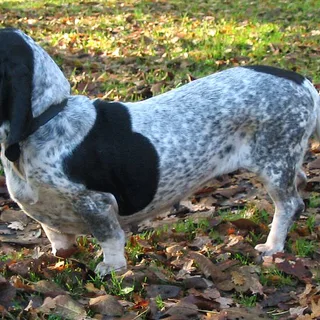
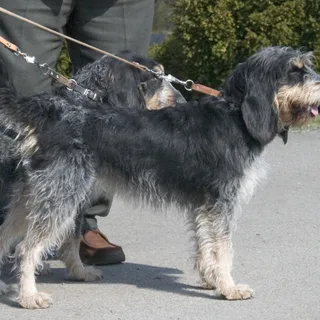
The Petit Bleu de Gascogne descends from the large scenthounds of the south-west, more compact than the Grand Bleu, selected for hunting hare and roe deer. Its characteristic blue coat comes from black ticking on a white background. The breed belongs to the heritage of the French scenthounds of Gascony, alongside the Basset bleu and the Griffon bleu. It remains mainly bred by hunters, even if a few individuals live in very sporty families.
Appearance
What does it look like?
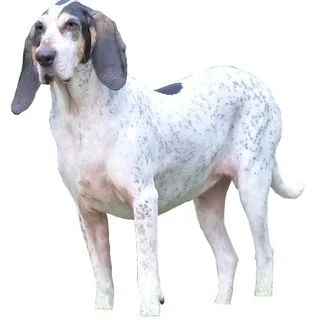
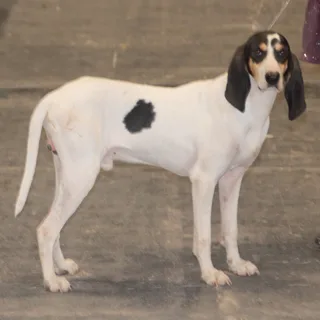
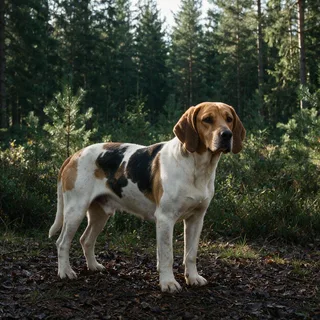
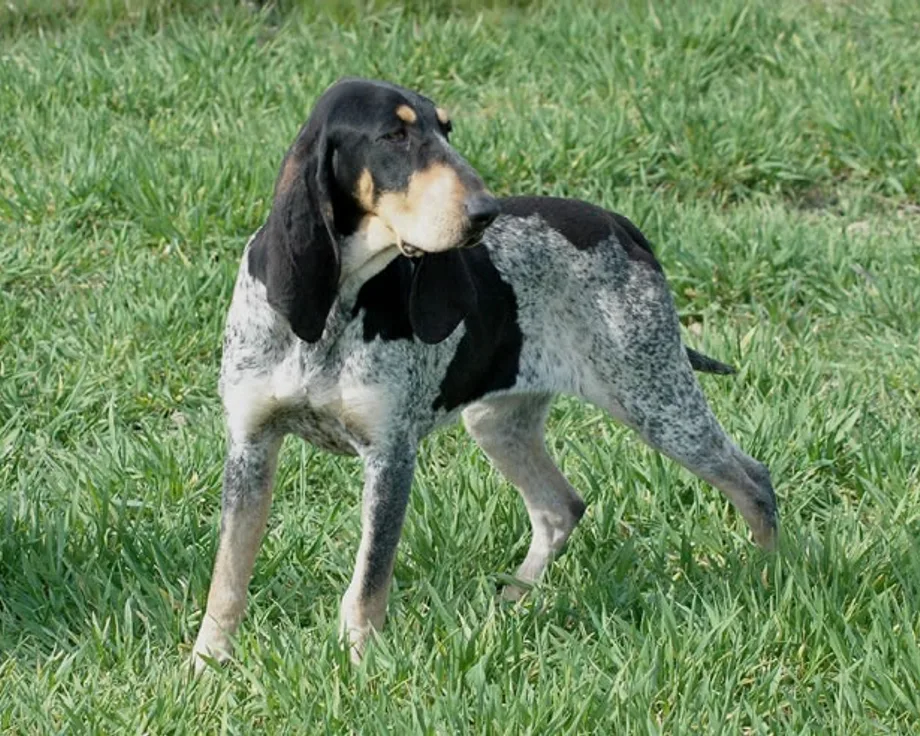
Medium-sized dog, elegant and muscular, lighter than the large Gascons. The head is elongated, the skull slightly domed, the ears long, fine and twisted. The eyes are brown, the expression gentle. The short coat forms a cloud-blue coat, often with black markings and pale tan points. The voice is full and characteristic.
Temperament
Temperament and personality
Affectionate with its pack and its family, passionate as soon as a trail presents itself. It is generally kind with children, but its hunting instinct complicates life with small animals. Not much of a guard dog, very vocal. It copes poorly with solitude and inactivity.
Living together
Living with children and other pets
He needs to run, to scent and to hear his voice. A garden does not replace outings. In an apartment, barking and lack of space quickly become a problem. After the effort, he can be calm at home.
Training
Training and socialization
Recall is the main worksite, to be trained in an enclosed area. Positive methods and scent-based rewards work. Consistency is better than harshness. Quality canine socialization helps pack-oriented dogs to live in a family as well.
Budget
Price and budget for the Petit Bleu de Gascogne
A working Petit Bleu de Gascogne puppy is often priced between 700 and 1 400 euros. The rarity of pet litters can affect waiting times more than prices.
See cost breakdownHealth
Health at a glance
Rustic hunting dog, it mainly suffers from ears, paw pads, parasites and sometimes stomach. Good physical condition and a check after outings prevent most of them. Well-monitored working lines generally remain solid.
Prevention and things to watch forNutrition
Feeding your pet well
The Petit Bleu de Gascogne needs a complete, digestible diet adjusted to its age, its activity and its body condition. Protein quality and control of energy intake matter as much as the volume of the ration.
Our feeding adviceDid you know?
Fun facts and popularity
The “blue” is not a solid color but a ticking which, from afar, gives a slate tone. Its trailing voice has long guided hunters in the Gascon woods. The Petit Bleu is more manageable on a daily basis than the Grand Bleu.