A menu for every age
Their needs change as they grow
Puppy: Growth food adapted to the expected size, divided into three meals, without unnecessary calcium supplementation.
Adult: Controlled ration in two meals, adjusted to ideal weight and actual activity.
Senior: Digestible food, possibly less energy-dense, with joint and dental monitoring.
Which food?
Kibble, wet food, or homemade meals?
Complete, good-quality kibble for an active medium-sized dog is generally very suitable, provided it offers digestible proteins and an appropriate energy density. Very active dogs may require a slightly more substantial formula depending on the season and the intensity of exercise.
Portion sizes
How much should you feed?
The quantity must be adjusted according to actual weight, age, sterilization, and activity level. In practice, the daily ration is often divided into 2 meals to promote regular digestion and avoid excesses.
| Weight | Daily amount | Meals per day |
|---|---|---|
| 18 kg | 260 - 315 g | 2 |
| 18 - 20 kg | 285 - 350 g | 2 |
| 20 - 23 kg | 310 - 380 g | 2 |
Changing food
How to switch foods successfully
Any dietary transition must be done gradually over several days in order to limit digestive upsets. It is preferable to mix the old and the new food by gradually increasing the proportion of the new.
Hydration
Don't overlook water
Clean, fresh water must remain available at all times, all the more so for an active dog that enjoys exercise and outings. Increased vigilance is required after sport, in hot weather and during travel.
A little extra
Treats in moderation
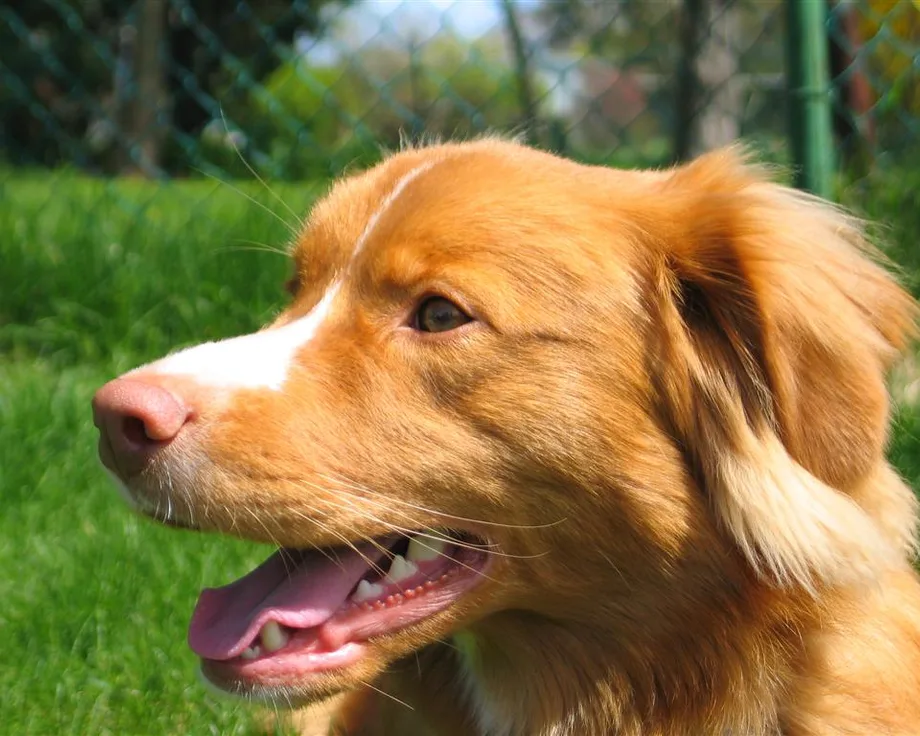
Treats can be useful in training, especially with a playful and receptive dog like the Toller, but they must remain moderate. They fit into the overall ration so as not to unbalance energy intake.
Good habits
Make mealtimes count
- Weigh the ration each day rather than serving by volume.
- Avoid intense exertion just before and after the meal.
- Deduct training treats from the daily ration.
Never feed these foods
As with other dogs, it is necessary to avoid in particular chocolate, onion, garlic, grapes, avocado, alcohol, cooked bones and foods high in xylitol, as they can cause digestive, neurological, hematological or renal disorders that are sometimes serious.