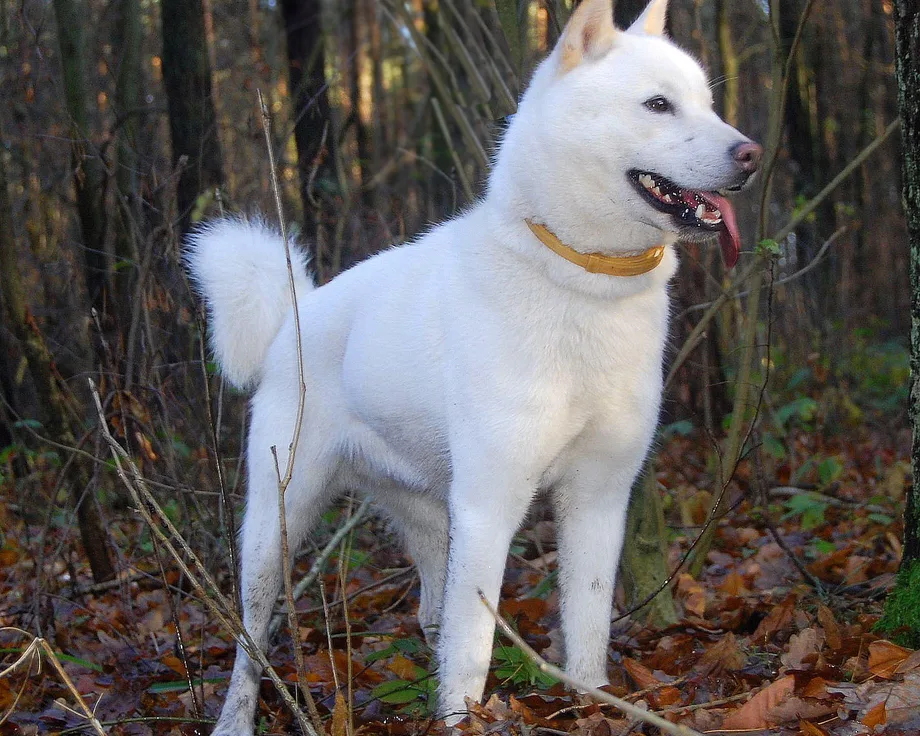
A menu for every age
Their needs change as they grow
Puppy: A growth diet for a medium-sized puppy, highly digestible and split into several meals, helps support bone, muscle and behavioral development.
Adult: In adulthood, the ration must cover muscle maintenance and physical expenditure without promoting overweight, with an adjustment according to lifestyle and season.
Senior: For seniors, a diet that is easier to metabolize is preferred, with monitoring of weight, mobility and kidney function according to the veterinarian's advice.
Which food?
Kibble, wet food, or homemade meals?
A complete premium diet for an active medium-sized dog generally suits the Hokkaïdo Ken well, in the form of high-quality kibble or a home-prepared ration formulated with a professional. The most important thing is to ensure a good intake of animal proteins, proper digestibility and an energy density suited to its actual activity.
Portion sizes
How much should you feed?
The daily amount varies according to weight, sex, age, sterilization, outside temperature and physical expenditure. It is preferable to adjust the ration gradually by monitoring body condition, stool quality and energy level, rather than relying on a fixed amount all year round.
| Weight | Daily amount | Meals per day |
|---|---|---|
| 18 - 20 kg | 336 - 461 g | 2 |
| 20 - 23 kg | 341 - 468 g | 2 |
| 23 - 25 kg | 373 - 512 g | 2 |
Changing food
How to switch foods successfully
Any change in diet must be carried out gradually over several days in order to limit digestive disorders. A slow transition, with increasing introduction of the new food, is particularly useful in active dogs or those that are sensitive from a digestive standpoint.
Hydration
Don't overlook water
Clean, fresh water must always be available, with increased vigilance after exercise, during trips and in hot weather. A double-coated dog like the Hokkaïdo Ken can be more uncomfortable in summer and must be able to rehydrate easily at any time.
A little extra
Treats in moderation
Treats can be useful for training and motivation, but they must remain moderate and integrated into the daily calorie balance. It is better to favor small, simple and digestible rewards, given at the right time, rather than numerous or very fatty extras.
Good habits
Make mealtimes count
- Weigh the ration rather than pouring it in at random
- Split into 2 meals per day for the adult
- Adjust the energy intake to periods of high activity
- Reduce treats if the silhouette gets heavier
Never feed these foods
As with other dogs, you should avoid chocolate, onion, garlic, grapes, raisins, avocado, cooked bones, alcohol, raw bread dough, xylitol and very fatty or very salty foods, as they can cause severe digestive, neurological, cardiac or kidney disorders.