Origins
Where does it come from?
The Grand Anglo-Français blanc et orange was developed in France from crosses between several French hunting dogs, notably the Billy, with an input of English Foxhound. This British influence is found mainly in the head and in the overall type. The breed remains today confidential, with few registered births, and remains essentially known in the world of French hunting.
Appearance
What does it look like?
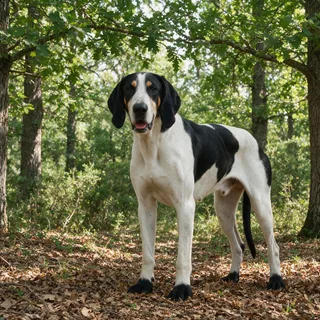
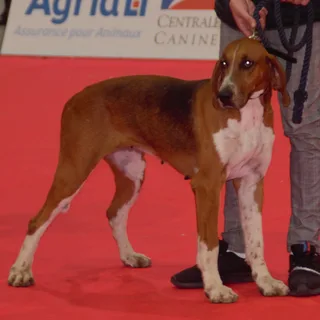
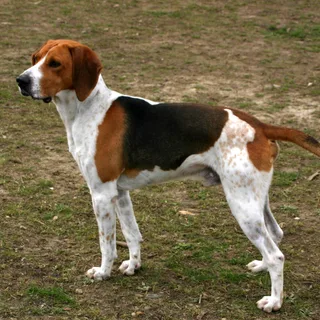
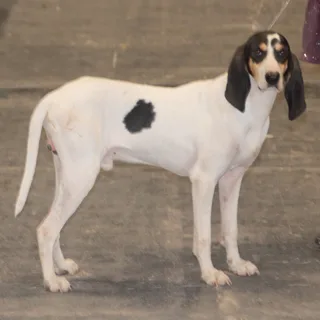
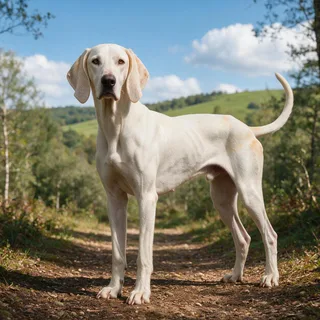
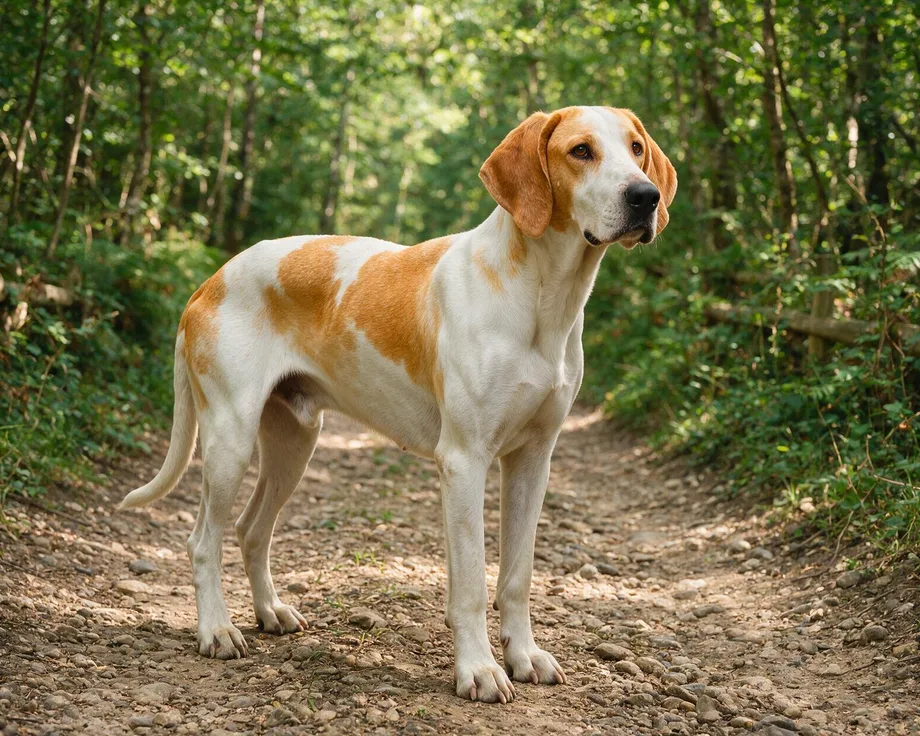
The Grand Anglo-French White and Orange is a large-sized dog, solidly built, harmonious and without heaviness. Its body is strong and muscular, with a broad back, a fairly short loin, a high and deep chest and long ribs. The head is fairly broad, the skull flattened, the stop well marked and the muzzle rather short. The ears are thick, set at eye level or slightly above, and the coat is bicolour white and lemon or white and orange, on a very short and not very thick hair.
Temperament
Temperament and personality
Versatile scenthound, the Grand Anglo-Français blanc et orange is above all an enduring and determined hunting assistant. In the family, it proves pleasant, friendly and generally gentle, including with children when it is well socialized. Its temperament nevertheless remains oriented toward action and work, with a true passion for scent and pursuit.
Living together
Living with children and other pets
On a daily basis, this breed needs to expend a lot of energy and tolerates prolonged inactivity poorly. It enjoys wide open spaces, long outings and rural environments where it can express its natural abilities. Urban life and apartment living suit it poorly, and its level of vocalization can be notable, especially when it is following a trail or living in an ill-suited context.
Training
Training and socialization
Training must start early, especially recall, essential in this hunting dog. The Grand Anglo-Français blanc et orange is not the most docile of dogs and requires consistent, firm and calm handling, without brutality or a power struggle. Sensitive and hardworking, it progresses better with a stable framework, clear habits and an owner able to channel its instincts.
Budget
Price and budget for the Great Anglo-French White and Orange
A rare breed and mainly found in specialized circles, the Grand Anglo-French White and Orange is found primarily with serious hunting-oriented breeders. The purchase cost depends above all on the availability of litters, the selection of bloodlines and the seriousness of the breeding.
See cost breakdownHealth
Health at a glance
The Grand Anglo-French White and Orange is considered a robust dog, generally resilient and endowed with solid health. The breed does not present a long list of known fragilities, but like many large active dogs, it deserves regular locomotor and ear monitoring.
Prevention and things to watch forNutrition
Feeding your pet well
The Grand Anglo-French White and Orange needs a balanced, good-quality diet adjusted to its age, its size and above all to its activity level. In this athletic dog, the consistency of the ration matters as much as the quality of the ingredients.
Our feeding adviceDid you know?
Fun facts and popularity
This breed remains rare, including in France, and it is uncommon to come across it outside hunting circles. Its name directly describes its function and its coat, while its type recalls the influence of the English lines used in its development. Despite this specialization, it can also prove to be a well-balanced family companion when it lives in a setting that meets its needs.