A menu for every age
Their needs change as they grow
Puppy: A growth diet for a medium to large breed, split into 3 to 4 meals, helps support development without excess energy.
Adult: A quality ration, split into 2 meals and adjusted to activity, suits most individuals.
Senior: With age, a more digestible formula is preferred and monitoring of weight, muscle mass and joint comfort.
Which food?
Kibble, wet food, or homemade meals?
Premium kibble for adult dogs of medium to large size and with sustained activity generally works very well. For dogs that work a lot, a more energy-dense formula can be useful during certain periods, while a more standard food is sufficient off-season if exercise decreases. In the case of a home-prepared or mixed ration, the nutritional balance must be validated with a veterinarian.
Portion sizes
How much should you feed?
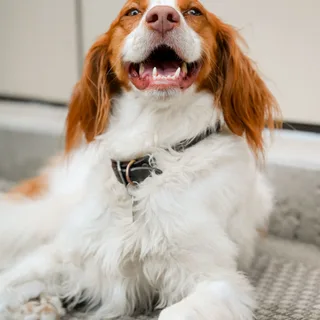
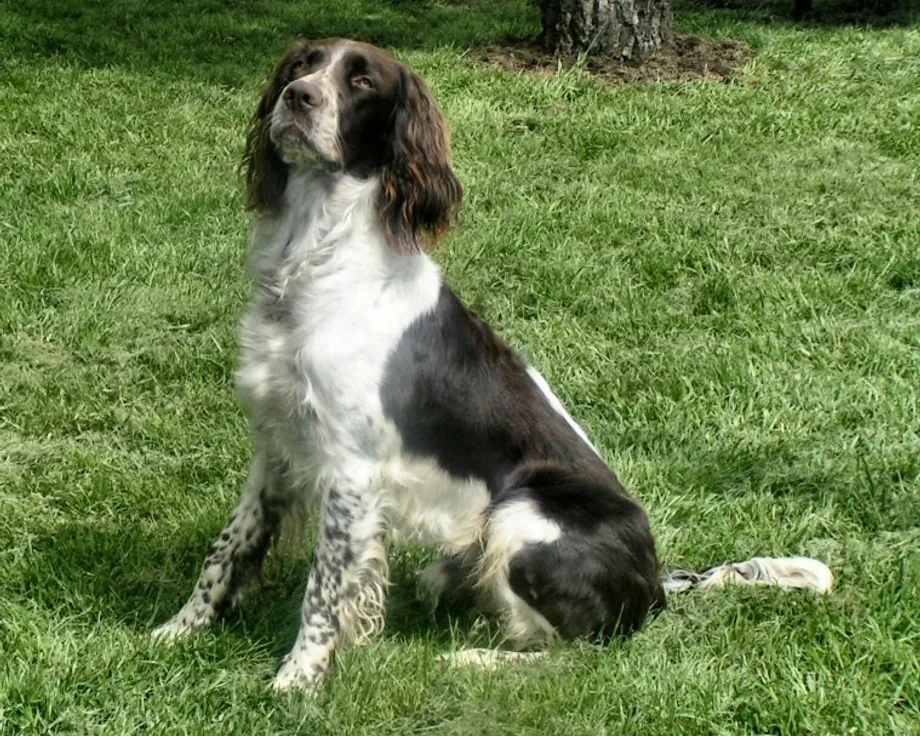
Quantities must be adjusted according to weight, actual activity, the food’s energy density, and body condition. A very active French Spaniel will not have the same needs as a dog living mainly as a companion. It is preferable to split the daily ration to improve digestive comfort, especially around exertion.
| Weight | Daily amount | Meals per day |
|---|---|---|
| 20 - 25 kg | 280 - 360 g | 2 |
| 25 - 30 kg | 320 - 400 g | 2 |
Changing food
How to switch foods successfully
Any dietary transition must be done gradually over about a week, or even longer for sensitive dogs. The proportion of the new food is increased little by little in order to limit digestive upsets and to better observe tolerance. An abrupt change is not recommended, especially in an active dog.
Hydration
Don't overlook water
Clean, fresh water must be available at all times. Hydration is particularly important after long outings, hunting sessions, hot days and trips. A very active dog may drink more depending on the season and the intensity of the effort.
A little extra
Treats in moderation
Treats can be useful for training and recall, provided they remain moderate and are included in the total ration. It is better to favor small, simple, digestible rewards rather than very fatty extras. With a hunting dog sensitive to motivation, the quality of the reinforcement often matters more than the quantity.
Good habits
Make mealtimes count
- Split the daily ration into 2 meals.
- Adjust the energy intake during the hunting season or very active periods.
- Avoid intense exertion just before and just after the meal.
- Regularly monitor body condition rather than following a fixed quantity all year round.
Never feed these foods
As with other dogs, it is necessary to avoid in particular chocolate, grapes, onion, garlic, avocado, cooked bones, alcohol, caffeine, xylitol and very fatty or very salty foods, as they can cause poisoning, severe digestive disorders or metabolic complications.