Origins
Where does it come from?
The Européen, also called European Shorthair, is a domestic cat selected to preserve the natural look of the house cat while meeting a breed standard. It descends from ancient feline populations established in Europe for centuries and was officially recognized as a distinct breed in the early 1980s. Long considered too close to the alley cat, it nevertheless remains a breed in its own right, appreciated for its simplicity and hardiness.
Appearance
What does it look like?
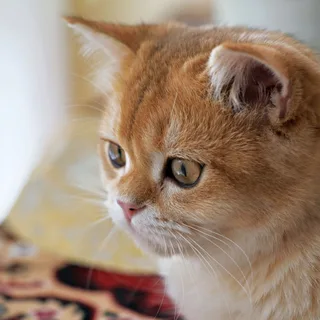
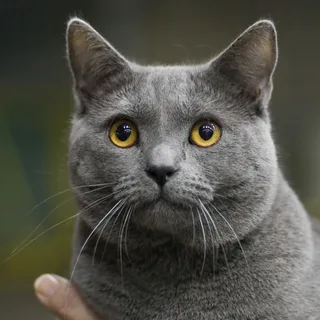
The European is a medium to large-sized cat, well-muscled, with a rectangular body, a developed chest and a solid bone structure. Its head is fairly long and rounded, with full cheeks, a distinct muzzle and medium ears, wide at the base. The coat is short, dense and glossy. The standard accepts many colors and patterns, with the exception of certain coats such as chocolate, lilac, cinnamon, fawn and colour point.
Temperament
Temperament and personality
The Européen is an affectionate, well-balanced and intelligent cat. It enjoys the company of its family while maintaining true independence. Playful and lively, it often retains a strong hunting instinct. It is generally sociable with humans, including children, but can prove more territorial with other cats.
Living together
Living with children and animals
This cat adapts easily to varied lifestyles. It can live in an apartment if its environment is enriched with hiding places, high points and games, but it also appreciates access to a garden or to a secured balcony. Curious and active without being excessive, it likes to observe, explore and take part in the daily life of the home.
Training
Training and socialization
The European responds well to gentle and consistent training. Early socialization, stable routines and positive reinforcement promote a cat that is comfortable in its own skin. It is useful to get it used from a young age to handling, transport, the scratching post and playtime to channel its need for activity.
Budget
European Shorthair price & budget
The price of a European registered as a breed remains variable depending on the lineage, the reputation of the cattery, identification, vaccination and the level of socialization of the kitten. As this breed is less sought after commercially than others, its availability can also influence the price.
View cost breakdownHealth
Health at a glance
The European is overall a solid cat, not well known for accumulating marked hereditary predispositions. Its hardiness makes it a breed reputed to be robust, provided it benefits from standard veterinary follow-up, an appropriate diet and a good level of activity.
Prevention & watch pointsDiet
Feed it well
The European needs a complete and balanced diet, rich in animal proteins and adapted to its age, its activity level and its physiological status. The quality of the intake matters more than volume alone.
Our feeding adviceDid you know?
Anecdotes and popularity
The European is often confused with the alley cat, even though there is indeed a precise breed standard. Its selection has precisely sought to preserve a natural, robust and functional type. The standard accepts almost all coat colors, which explains the great diversity of appearance within the breed.