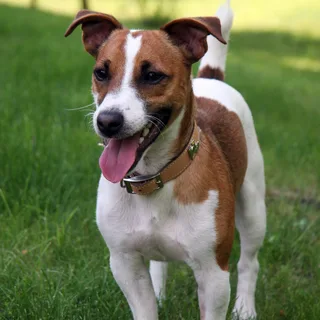
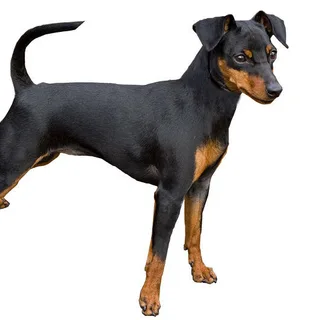
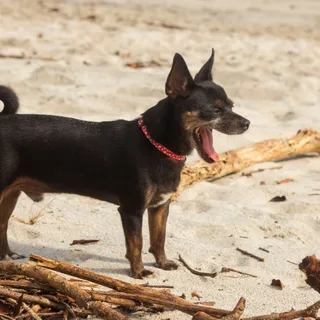
Longevity
Life expectancy
It lives on average from 12 to 15 years, sometimes longer, with regular activity and controlled weight.
Constitution
Is this a robust breed?
Very robust, it withstands outdoor living conditions and sporting activities well.
Things to watch for
What to look out for
As with many small active dogs, the kneecaps and teeth should be monitored, and the paws checked after runs on rough terrain.
Patellar dislocation : Possible as in many active small dogs.
Tartar : Regular dental care is recommended.
Sports injuries : Sprains and paw pad injuries in very active individuals.
Climate
Tolerance to cold and heat
It tolerates the temperate climate well. Its short coat protects it less from severe cold: a coat can be useful during long waits in winter.
Weight
Prone to weight gain
Active, he easily keeps his figure if he gets enough exercise. A ration suited to his actual activity is sufficient.
Everyday care
Good habits to keep your pet healthy
- Check the paw pads after runs on difficult terrain.
- Brush the teeth every week.
- Consult in case of repeated limping.
Vaccination
Danish-Swedish Farmdog vaccinations: schedule
Which vaccines does a Danish-Swedish Farmdog need? Like all dogs, Danish-Swedish Farmdogs should receive their core vaccines from 8 weeks of age: CHPPi (core vaccine) and Leptospirosis. Puppies receive their initial Danish-Swedish Farmdog vaccinations in several shots spaced 4 weeks apart, followed by a first booster at 1 year. Depending on their lifestyle (hunting, hiking, boarding, travel, region), your veterinarian may add vaccines against Rabies, Kennel cough, Piroplasmosis, Lyme disease and Leishmaniasis.
| Vaccine | Primary vaccination | First booster | Then | For whom? |
|---|---|---|---|---|
CHPPi (core vaccine)Core Distemper, Rubarth hepatitis, parvovirosis and parainfluenza | 8 weeks · 12 weeks · 3 months | 1 year | every year | All animals |
LeptospirosisCore Leptospirosis (bacterium transmitted by rodent urine and stagnant water) | 8 weeks · 12 weeks | 1 year | every year | All animals |
RabiesDepending on lifestyle Rabies | 12 weeks | 1 year | every year | Mandatory for travel abroad, categorized dogs, most boarding kennels and shows |
Kennel coughDepending on lifestyle Bordetella bronchiseptica and parainfluenza | 8 weeks | 1 year | every year | Dogs attending boarding kennels, daycares, dog clubs and shows |
PiroplasmosisDepending on lifestyle Tick-borne babesiosis | 5 months · 6 months | 1 year | every year | Hunting dogs, dogs living in rural or wooded areas, dogs highly exposed to ticks |
Lyme diseaseDepending on lifestyle Tick-borne borreliosis | 12 weeks · 3 months | 1 year | every year | Hiking dogs, hunting dogs, forest areas of the East and the Center |
LeishmaniasisDepending on lifestyle Leishmaniasis transmitted by sandflies | 6 months | 1 year and 6 months | every year | Dogs living or staying in the South of France, Corsica and the Mediterranean basin |
Adult Danish-Swedish Farmdog booster shots are given annually for leptospirosis and rabies. For distemper, hepatitis, and parvovirus, a booster every three years is often enough after the first booster. Your veterinarian will tailor the schedule to your dog's actual risk.
Which boosters does your Danish-Swedish Farmdog need?
Enter your companion's age to see which vaccines are due now and when the next boosters are needed.
Choosing well
Adopting a healthy Danish-Swedish Farmdog
A check of the patellae and an eye examination of breeding animals are recommended.
This information is for guidance only and doesn't replace advice from a veterinarian. If you have any concerns about your pet's health, consult a professional.