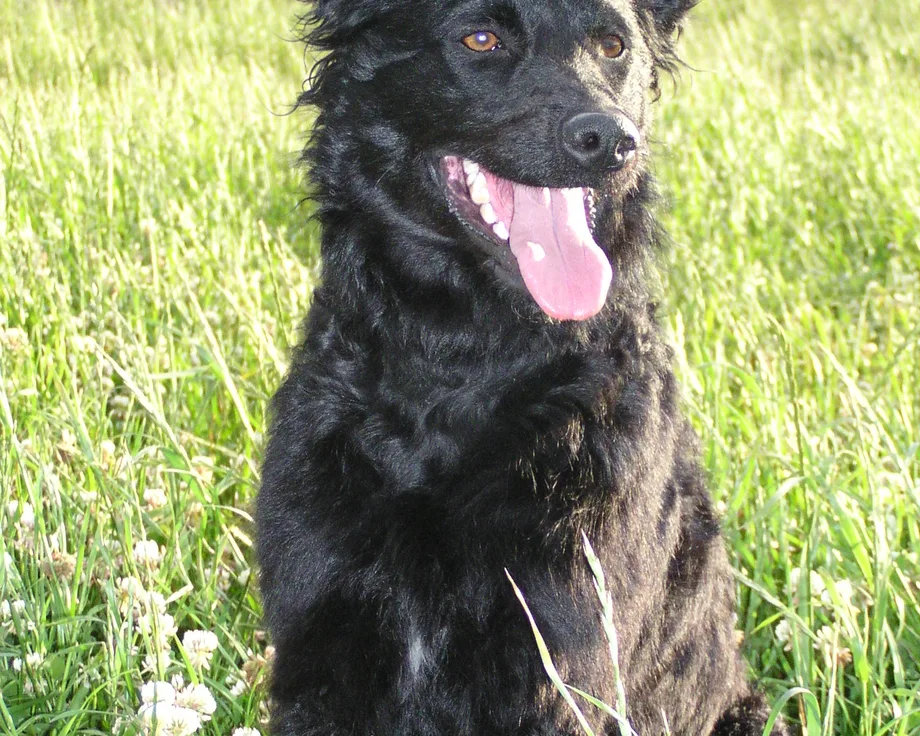
A menu for every age
Needs change over time
Puppy : a growth diet for a medium-sized dog helps support bone, muscle and nervous development without excess energy.
Adult : a stable ration adapted to activity helps maintain muscle mass, endurance and a proper weight.
Senior : a more digestible and less caloric food can become useful with age, depending on body condition and activity.
Which food?
Kibble, wet food, or home-cooked diet?
Complete, good-quality kibble for a medium-sized and active dog is generally well suited, provided it is formulated with digestible proteins and an appropriate energy density. The exact choice of food must take into account the level of exercise, age and body condition.
Amounts
How much should you give?
The daily ration must be adjusted to the dog’s weight, physical activity and body condition, then preferably divided into two meals. Regular observation of the silhouette and appetite makes it possible to fine-tune the quantities with the veterinarian if necessary.
| Weight | Daily amount | Meals/day |
|---|---|---|
| 15 - 17 kg | 283 - 388 g | 2 |
| 17 - 18 kg | 310 - 425 g | 2 |
| 18 - 20 kg | 336 - 461 g | 2 |
Change
Managing the food transition
Any change in diet must be done gradually over several days in order to limit digestive disorders. A change that is too abrupt can lead to loose stools, abdominal discomfort or refusal to eat.
Hydration
Water: do not overlook it
Clean, fresh water must remain available at all times, especially after exercise, in hot weather or when traveling. Hydration is a simple but essential point for an active dog.
Little extras
Treats, in moderation
Treats can be useful in training, but they must remain measured and included in the calculation of the overall ration. It is preferable to choose simple, digestible rewards and given at the right time.
Good habits
For a top-notch bowl
- Split the ration into 2 meals per day.
- Avoid intense exercise in the hour before and after meals.
- Adjust the ration to the actual activity level and body condition.
- Introduce any new food gradually over several days.
Never give
As with other dogs, it is necessary to avoid in particular chocolate, onion, garlic, grapes, cooked bones, alcohol, xylitol and very fatty foods, as they can cause serious digestive disorders, poisoning or metabolic complications.