+17

Dogs

The Boxer: temperament, price, health, and breeders

Germany

An athletic, loyal and playful dog, very attached to its family.

Size LargeLife expectancy 10–12 yearsBudget ≈ €140/monthPuppy €800 – €1,400

The right choice?

Is this breed right for you?

Families and children Excellent
Daily exercise needs High
Apartment living Good
First-time owners Good
Other pets Good
Tolerance of being alone Fair
Guarding instinct Very good

Strengths and weaknesses

  • Very attached to his family: He seeks closeness to his owners and is loyal and affectionate.
  • Excellent companion for children: He is protective, caring and particularly playful with them.
  • Intelligent and receptive: His desire to please makes learning through positive reinforcement easier.
  • Athletic and enthusiastic: He readily takes part in walks, games and family activities.
  • Health to monitor: The breed has several respiratory, cardiac, joint and tumor predispositions.
  • High activity needs: Long outings and daily games are essential to its balance.
  • Low tolerance to extreme temperatures: Its short muzzle and short coat make it sensitive to heat as well as cold.
  • Possible drooling: The male in particular tends to drool more indoors.

Who is it for?

Ideal for

  • Active owner: They can offer it long walks, games and shared activities every day.
  • Family with children: Its affectionate, protective and playful temperament fits well with family life.
  • Present and involved household: It greatly appreciates human closeness and consistent training.
  • House with outdoor space: Secure access to the outdoors makes its daily exercise easier without replacing walks.

Not recommended for

  • Very sedentary person: Its high energy level requires sustained daily activity.
  • Often absent household: Very attached to its owners, it needs regular presence and interactions.
  • Very hot climate without accommodations: Its brachycephalic morphology increases the risk of breathing difficulties.
  • Owner refusing health monitoring: Its predispositions require screenings and careful veterinary monitoring.

Meet the breed

What does it look like?

1,75 mHuman
58 cmBoxer
Height at the withers
53–63 cm
Weight
25–35 kg
Coat
Short, close and smooth
FCI group
2
Origin
Germany
Grooming
Easy to care for

Photos and videos

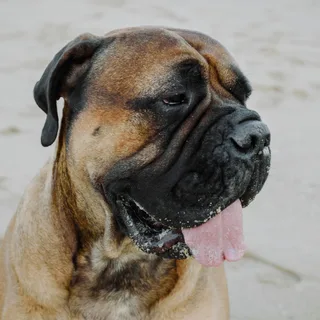
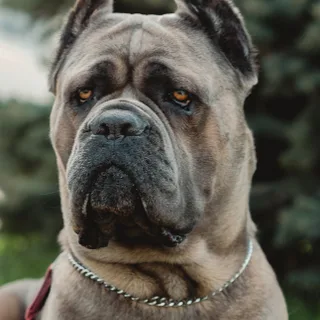
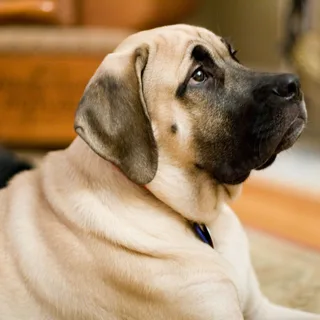
See the Boxer in photos and videos: coat colors, size, and distinctive expressions.

Origins

Where does it come from?

The Boxer descends directly from the Bullenbeisser, or Brabant Bull Dog, formerly used to immobilize game pursued by hounds. Its selection favored a broad muzzle and an upturned nose. The development of the modern Boxer begins at the end of the 19th century in Germany around Alt's Flora, then Lechner's Box and his daughter Schecken. The breed club is created in Munich in 1895 and establishes the first standard. The first Boxer is registered in the studbook in 1904. The breed, also called Deutscher Boxer, bears the FCI number 144 and has been recognized by the FCI since 1955.

Appearance

What does it look like?

The Boxer has a powerful, square and athletic build, without heaviness. Its massive body rests on robust and straight limbs, with a marked withers, a short back and a broad and muscular loin. Its well-proportioned head has a narrow skull with a cubic appearance and a broad and powerful muzzle. Its dark brown eyes express attentiveness and intelligence. Its high-set ears fall forward with a slight fold. Its tail, of normal length, is carried naturally. Its coat is fawn or brindle, with at most one third white.

Temperament

Temperament and personality

Confident, calm and even-tempered, the Boxer is extremely loyal to its owner. Affectionate, protective and very playful with children, it is more wary of people outside its circle. Courageous and determined when defending its family, it remains intelligent and eager to please.

Affectionate Playful Intelligent Sociable Protective

Living together

Living with children and other pets

The Boxer seeks indoor comfort and closeness to its owners, but it needs regular outings, long walks and daily play to burn off its energy. It likes to take part in family activities and can do dog sports. A house with an outdoor space suits it particularly well, even if apartment living remains possible when its activity needs are truly met.

Training

Training and socialization

Education and socialization must begin from the earliest age. A method based on positive reinforcement, rewards and encouragement, combined with firm and consistent rules, promotes learning obedience and basic commands. Its intelligence and its desire to please make its education easier, even if professional support can be useful for inexperienced owners.

Budget

Price and budget for the Boxer

The purchase price varies depending on the breeder, the bloodline, the pedigree, the health screenings carried out, compliance with the standard and the puppy's intended purpose.

See cost breakdown

Health

Health at a glance

The Boxer has several predispositions that justify careful veterinary monitoring. Its short muzzle can promote breathing difficulties, especially in hot weather. The breed may also be affected by cardiac, joint, neurological, endocrine, ocular and digestive disorders.

Prevention and things to watch for

Nutrition

Feeding your pet well

The Boxer can receive a complete and balanced diet based on high-quality kibble, adapted to its age, its size, its activity and its state of health.

Our feeding advice

Did you know?

Fun facts and popularity

Brandy, a Boxer that died in 2002, held the world record for the longest tongue, measured at 43 cm. Boss received the Palm Dog in 2010 for his role in the film Tamara Drewe. A litter generally consists of 6 to 10 puppies.
FAQ

Frequently asked questions about the Boxer

Answers to common questions from future owners before their new companion arrives.

Yes. He is generally affectionate, protective, and very playful with children. As with any dog, interactions should remain supervised and respectful.

Yes, provided he gets long outings, games, and sufficient physical exercise every day. He strongly seeks closeness to his owners.

No, he tolerates it poorly because of his short muzzle. You should avoid full sun and exertion during hot hours, and leave him water as well as a cool space.

No. His short coat sheds moderately and the breed is not considered hypoallergenic.

Find a Boxer breeder

The areas where Pedibase lists the most Boxer breeders, along with their litters and typical prices.

Boxer breeders by country

All breeders of Boxer in France

Ready to welcome a Boxer?

Find a registered, verified breeder near you and meet your future companion with confidence.

View breeders

Compare Boxer with other breeds