Origins
Where does it come from?
The Border Terrier was born in the Borders region, on the historic border between Scotland and England. It is said to come from crosses between several British working terriers, notably the Bedlington Terrier, the Lakeland Terrier and the Dandie Dinmont Terrier. Traditionally used for fox hunting alongside hounds such as the Foxhound, it had to be hardy enough to follow the horses and small enough to enter the burrows. It also helped to protect farms and herds. The Fédération Cynologique Internationale definitively recognized the breed on 26 June 1963 under number 10, in group 3 of terriers. The standard mentioned by the source came into force on 24 June 1987.
Appearance
What does it look like?
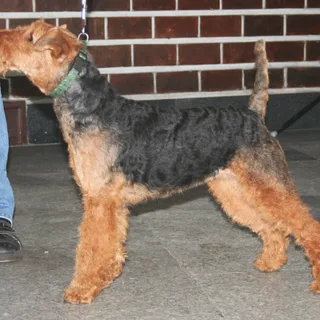
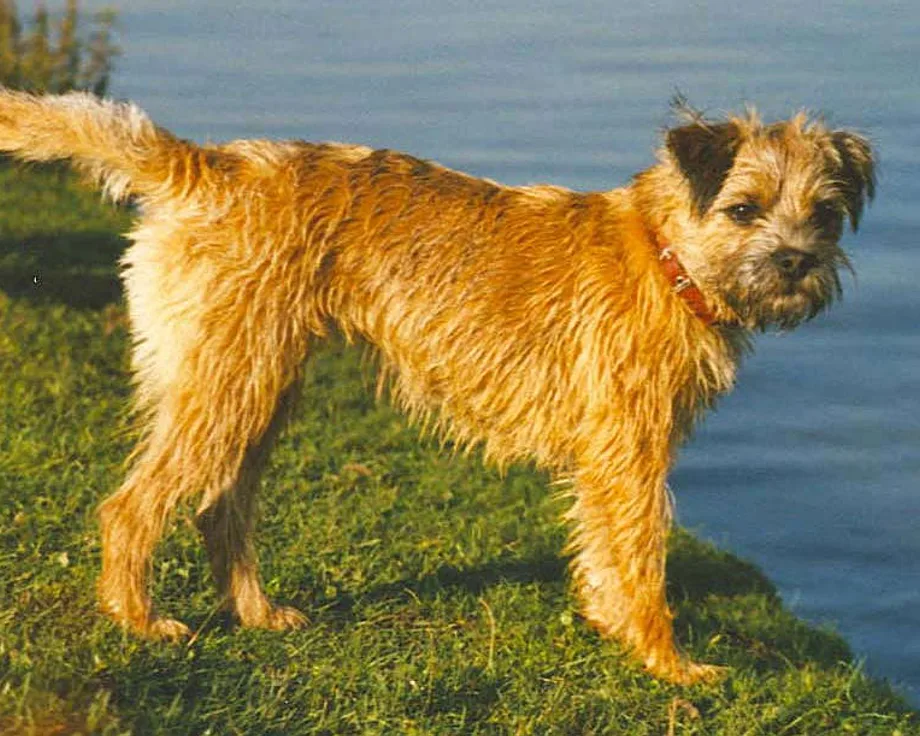
Small, light dog but solidly built, the Border Terrier has a fairly long, tall and narrow body, a strong loin and ribs well extended towards the rear without being excessively arched. Its broad head with a short, powerful muzzle recalls that of the otter. Its dark eyes have a lively expression, while its small V-shaped ears fall forward against the cheeks. Its topcoat is harsh, dense and compact, with a close undercoat. Its tail, set on high, is moderately long, thick at the base then tapering. Accepted coat colours include red, wheaten, grizzle and tan, as well as blue and tan.
Temperament
Temperament and personality
Courageous, cheerful and full of energy, the Border Terrier remains very attached to its owners. Its strong-willed temperament can make it stubborn, but its intelligence and good understanding make consistent training easier. Affectionate without being placid, it enjoys family life and can get along well with respectful children. Its hunting instinct remains very pronounced, especially toward rodents and small animals.
Living together
Living with children and other pets
Enduring and very active, the Border Terrier needs long daily outings, exploration and stimulating activities. He generally prefers the countryside, but can live in an apartment if his needs for running and exercise are truly met. He does not tolerate long periods of solitude well and may then adopt undesirable behaviors. Sociable with humans and generally fine with his fellow dogs, he requires greater caution with small animals due to his predatory instinct.
Training
Training and socialization
His training must begin early and combine firmness, consistency and positive methods, without brutality. Intelligent and receptive, the Border Terrier quickly memorizes the rules, but his temperament and hunting instinct require working particularly on recall, self-control and leash walking. Early socialization with people, dogs and different environments helps to channel his natural confidence. Short, varied and motivating sessions suit him better than monotonous repetitions.
Budget
Price and budget for the Border Terrier
The price of a Border Terrier varies depending on the quality of the breeding, the pedigree, the parents' health tests, conformity to the standard, the sex and the puppy's intended purpose. The annual maintenance costs indicated by the source are around 850 to 950 euros.
See cost breakdownHealth
Health at a glance
Despite its small size, the Border Terrier is a hardy and generally robust dog. No hereditary pathology specific to the breed is reported, but regular veterinary monitoring remains necessary to preserve its health over the long term.
Prevention and things to watch forNutrition
Feeding your pet well
The Border Terrier is generally not difficult to feed. A complete, healthy and balanced diet, adapted to its small size and its activity level, helps maintain its vitality and its optimal weight.
Our feeding adviceDid you know?
Fun facts and popularity
The breed’s name comes directly from the Borders, the border region between Scotland and England. Its head, resembling that of an otter, is one of its best-known distinguishing features. Historically, it had to be able to keep up with a horse and then slip underground in pursuit of the fox. A litter generally consists of 2 to 8 puppies.