Longevity
Life expectancy
The life expectancy of the Sphynx is generally between 8 and 14 years. This longevity depends greatly on the quality of the breeding, cardiac monitoring, lifestyle hygiene and protection against climatic aggressions, in particular cold and sun.
Constitution
Is this a robust breed?
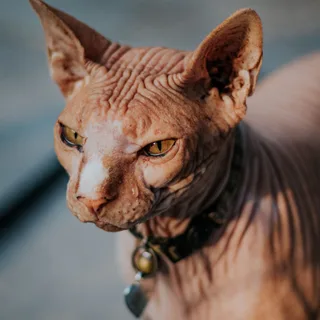
Despite its delicate appearance, the Sphynx is often considered a rather robust cat. Its main fragility is not due to its overall constitution, but to the lack of fur, which leaves its skin more exposed and increases its sensitivity to temperature variations.
Things to watch for
What to look out for
Monitoring the skin, the heart and the general condition must be part of the routine follow-up for this breed. Serious selection in breeding and regular veterinary check-ups are essential to limit the impact of known predispositions and quickly detect abnormal signs.
Hypertrophic cardiomyopathy: This hereditary condition thickens the walls of the heart and warrants regular cardiac monitoring, especially in at-risk lineages.
Sunburn: The lack of fur exposes the skin directly to UV rays, which makes it necessary to limit exposure and protect the cat during outings.
Skin problems: The skin may be prone to irritation, excess sebum, or certain infections if hygiene and monitoring are not appropriate.
Climate
Tolerance to cold and heat
The Sphynx does not tolerate the cold well and must live in a temperate indoor environment. It is also sensitive to the sun, because its insufficiently protected skin can suffer irritations or burns in the event of direct and repeated exposure.
Weight
Prone to weight gain
The Sphynx often has sustained energy needs to maintain its body temperature, but this does not exempt it from weight monitoring. An appropriate diet, regular weigh-ins and good daily activity help maintain a harmonious silhouette without excess or weight loss.
Everyday care
Good habits to keep your pet healthy
- Regularly check the skin, ears, and skin folds.
- Limit exposure to direct sunlight and low temperatures.
- Plan for veterinary cardiac monitoring according to the breeder’s and practitioner’s recommendations.
Vaccination
Sphynx vaccinations: schedule
Which vaccines does a Sphynx need? Like all cats, Sphynxs should receive their core vaccines from 8 weeks of age: Typhus (panleukopenia) and Coryza. Kittens receive their initial Sphynx vaccinations in several shots spaced 4 weeks apart, followed by a first booster at 1 year, even if they live indoors. Depending on their lifestyle (outdoor access, living with other cats, shows, travel), your veterinarian may add vaccines against Feline leukemia (FeLV), Rabies and Chlamydiosis.
| Vaccine | Primary vaccination | First booster | Then | For whom? |
|---|---|---|---|---|
Typhus (panleukopenia)Core Feline panleukopenia (cat parvovirus) | 8 weeks · 12 weeks · 3 months | 1 year | every year | All animals |
CoryzaCore Feline herpesvirus and calicivirus | 8 weeks · 12 weeks · 3 months | 1 year | every year | All animals |
Feline leukemia (FeLV)Depending on lifestyle Feline leukemia virus | 8 weeks · 12 weeks | 1 year | every year | Outdoor cats, cats living in a group or in a cattery |
RabiesDepending on lifestyle Rabies | 12 weeks | 1 year | every year | Mandatory for travel abroad, cat shows and most boarding kennels |
ChlamydiosisDepending on lifestyle Chlamydia felis (contagious conjunctivitis) | 8 weeks · 12 weeks | 1 year | every year | Cats living in groups, catteries, show cats |
Adult Sphynx booster shots are given annually for feline herpesvirus and feline leukemia if your cat goes outdoors. For feline panleukopenia, a booster every three years is often enough after the first booster. Your veterinarian will tailor the schedule to your cat's lifestyle.
Which boosters does your Sphynx need?
Enter your companion's age to see which vaccines are due now and when the next boosters are needed.
Choosing well
Adopting a healthy Sphynx
Regular cardiac monitoring is recommended, in particular to screen for possible hypertrophic cardiomyopathy. The veterinarian can also check the condition of the skin, ears, and teeth, and adjust prevention according to the cat's age and lifestyle.
This information is for guidance only and doesn't replace advice from a veterinarian. If you have any concerns about your pet's health, consult a professional.