Origins
Where does it come from?
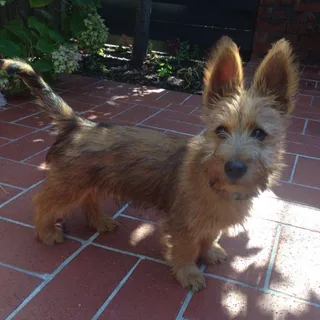
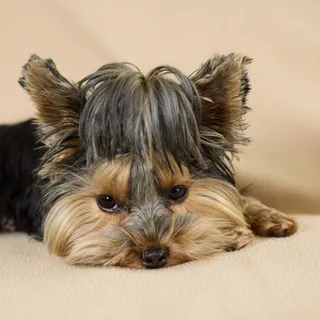
The Silky Terrier descends from the Australian Terrier and the Yorkshire Terrier. The breed was developed in Australia from the first half of the 19th century, notably around Sydney, from crossbreeding aimed at obtaining a small companion terrier with a long, silky coat without losing the courage characteristic of the terrier group. A first standard was established in 1900 and the breed was definitively recognized by the FCI in 1962.
Appearance
What does it look like?
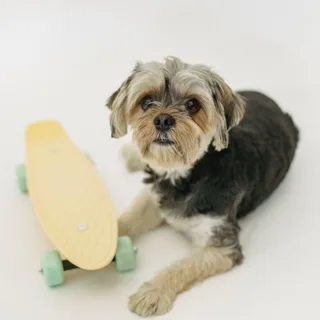
The Silky Terrier is a small compact dog, slightly longer than tall, with a fine but solid bone structure. Its head is moderately long with a flat skull, dark oval eyes and small upright V-shaped ears. Its coat, fine, long, flat, glossy and of a silky texture, is its most distinctive feature. The coat colour is blue and tan, ideally with intense shades and a lighter topknot.
Temperament
Temperament and personality
The Silky Terrier has a balanced, lively and determined temperament. Very attached to its owner and its family, it is affectionate and pleasant on a daily basis while retaining the courage and tenacity of a true terrier. It is alert, curious and full of fine liveliness, with a tendency to be vocal when it wants to signal something.
Living together
Living with children and animals
The Silky Terrier adapts fairly well to a variety of lifestyles, including apartment living, provided it benefits from daily outings and regular stimulation. It likes to take part in household life, play and stay close to its humans. Its terrier instinct can lead it to chase small animals and it does not tolerate an overly passive daily routine well.
Training
Training and socialization
Training the Silky Terrier requires consistency, calm firmness and a lot of gentleness. This small sensitive dog responds better to positive reinforcement, encouragement and rewards than to harsh methods. It is important to set clear limits early in order to channel its liveliness and avoid the development of excessive barking or stubborn habits.
Budget
Silky Terrier price & budget
The Silky Terrier remains a rather uncommon breed, which can affect the price depending on the reputation of the kennel, the quality of the lineage, health monitoring and compliance with the standard. Beyond the purchase price, you must also take into account regular grooming, food and routine veterinary expenses.
View cost breakdownHealth
Health at a glance
The Silky Terrier is overall a rather sturdy small dog, but certain predispositions deserve particular vigilance. As with other small-format terriers, regular veterinary follow-up, weight control and observation of gait, breathing and skin help detect potential problems earlier.
Prevention & watch pointsDiet
Feed it well
The Silky Terrier is satisfied with a complete, high-quality diet, adapted to its small size, its age and its activity level. Its daily ration is best divided into two meals in order to promote regular digestion and good day-to-day comfort.
Our feeding adviceDid you know?
Anecdotes and popularity
Also known as the Australian Silky Terrier or Sydney Silky, the Silky Terrier is often confused with the Yorkshire Terrier because of its size and coat. However, it differs from it by a slightly sturdier build and by a well-marked terrier temperament. Its name refers directly to the silky texture of its coat.