Origins
Where does it come from?
As its name indicates, the Nova Scotia Retriever originates from the Canadian province of Nova Scotia. The breed was developed at the beginning of the 19th century for duck hunting, with a specialization in retrieving waterfowl. Recognized by the FCI in 1981, it is also known by its English name Nova Scotia Duck Tolling Retriever.
Appearance
What does it look like?
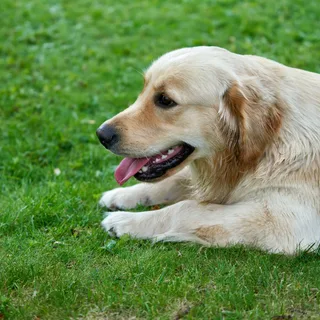
The Nova Scotia Retriever is a medium-sized dog, compact, powerful and well proportioned, with developed musculature and good agility. Its coat ranges from red to orange, often with a few white markings. Its medium-length coat, straight to slightly wavy, is double, dense and protective against cold and humidity. Its wedge-shaped head, its amber to brown eyes and its fringed tail give it a lively and attentive expression.
Temperament
Temperament and personality
It is a cheerful, affectionate, alert and intelligent dog. Very involved in the activities of its household, it likes to work, play and cooperate with its owner. Its hunting instinct remains present, but it also proves pleasant with the family when it has been sufficiently exercised.
Living together
Living with children and animals
The Nova Scotia Retriever is an active dog that likes to move, explore and swim. It does not tolerate prolonged inactivity well and needs regular outings, games and stimulating activities. At home, it can be friendly with the family and children, but it thrives above all in a setting offering space, activity and daily interactions.
Training
Training and socialization
His training requires consistency and a certain firmness, without harshness or a power struggle. Intelligent and receptive, he learns well with positive reinforcement, play and varied exercises. Recall, self-control and channeling his energy must be worked on from the youngest age.
Budget
Nova Scotia Duck Tolling Retriever price & budget
The purchase price varies depending on the quality of the origins, the selection work, the reputation of the kennel and the follow-up offered. A breed still relatively uncommon, the Nova Scotia Retriever can show high prices among serious breeders.
View cost breakdownHealth
Health at a glance
The Nova Scotia Retriever is overall a robust and resilient dog, notably against cold and bad weather thanks to its double and dense coat. Like many active medium-sized breeds, it nevertheless deserves serious preventive monitoring, in particular on the joint, ocular and endocrine level.
Prevention & watch pointsDiet
Feed it well
The Nova Scotia Retriever needs a quality, balanced diet adapted to its age, its size and its activity level. Its athletic profile requires a ration consistent with its expenditure, in order to support its muscle mass without promoting overweight.
Our feeding adviceDid you know?
Anecdotes and popularity
The Nova Scotia Retriever is often nicknamed Toller. Its English name refers to tolling, a hunting technique in which the dog draws the ducks' attention with its lively movements along the shore before retrieving the game. Its reddish appearance and liveliness sometimes earn it comparisons to a fox.