Origins
Where does it come from?
The breed is said to have originated in the shipwreck, in 1807 off the coast of Maryland, of a ship coming from Great Britain. Two surviving Newfoundland-type dogs, the male Sailor and the female Canton, distinguished themselves by their swimming abilities and their aptitude for retrieving water game in the difficult conditions of the Chesapeake Bay. Local hunters crossed them with various water game retrievers in order to obtain dogs that were hardy, determined and enduring. The Curly Coated Retriever, the Flat-Coated Retriever and the Irish Water Spaniel are among the breeds cited in its development in the 19th century. The American Kennel Club recognized the breed as early as 1884. The Fédération Cynologique Internationale classifies it under standard number 263 and recognized it definitively in September 1964.
Appearance
What does it look like?
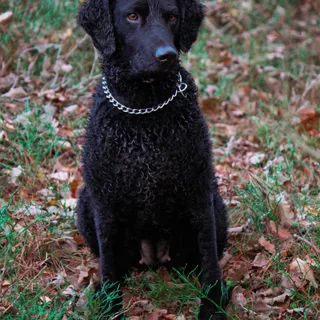
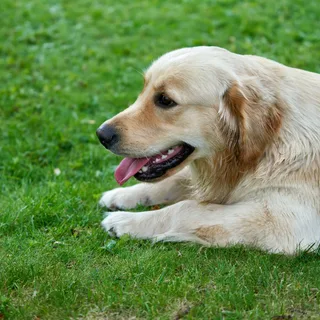
The Chesapeake Bay Retriever has a moderately long, well-proportioned and powerful body, with a short back, a strong and broad chest. Its skull is broad and rounded, its stop moderate and its jaws powerful. Its light eyes, from yellowish to amber, express intelligence and liveliness. Its small pendant ears are set high. Its tail, of medium thickness and length, is straight or slightly curved. Its short and dense coat combines a harsh outer coat with a dense and woolly undercoat, which protects it from water and ice. The coat is preferably solid-colored, in shades of brown, sedge or deadgrass, with sometimes a small white marking permitted on certain areas.
Temperament
Temperament and personality
Alert, intelligent and affectionate, the Chesapeake Bay Retriever is a willing worker who likes to stay active, play and please his owner. He is close to his family and playful with children. His protective instinct is marked without being associated with aggressiveness. He has a fine sense of smell, particularly appreciates water and knows how to remain calm and composed outside of activities.
Living together
Living with children and animals
This retriever needs long, frequent outings and cannot be satisfied with brief walks. Retrieving games, object search, and activities in large open spaces suit its natural abilities well. It prefers a house with a large fenced garden, close to the countryside, woods, or bodies of water. City life remains possible if its needs for walks and stimulation are truly met, but an apartment suits it less.
Training
Training and socialization
Naturally drawn to work and play, the Chesapeake Bay Retriever is trained with patience, consistency and positive methods. Rewards and encouragements foster his obedience. Socialization must begin early, as must recall training, essential to allow him to exercise safely. Any brutality must be avoided.
Budget
Chesapeake Bay Retriever price & budget
The purchase price varies depending on the breeder, the lineage and the guarantees provided. The source also estimates the annual maintenance between 500 and 600 euros, excluding exceptional expenses.
View cost breakdownHealth
Health at a glance
The Chesapeake Bay Retriever has overall robust health. Its double, dense and protective coat allows it to withstand cold and bad weather and to dry quickly after working in water. The breed nevertheless remains predisposed to several joint, ocular and neurological conditions that justify careful selection and regular veterinary monitoring.
Prevention & watch pointsDiet
Feed it well
The diet must meet the needs of a sporty and active dog while avoiding excesses. Nutritional quality and adjusting portions to daily activity are essential to maintaining its physical condition.
Our feeding adviceDid you know?
Anecdotes and popularity
The Chesapeake Bay Retriever is also known by the names Chesapeake Bay Retriever and Chessie. Its history is closely linked to the duck hunters of the Chesapeake Bay, who were looking for a retriever capable of facing cold water, ice, tides and wind.