Origins
Where does it come from?
The origins of the Flat-Coated Retriever are said to date back to the island of Newfoundland, in present-day Canada, where retrieving dogs helped fishermen recover fish that had escaped from the nets. Later imported into England, it was developed in the 19th century through crossbreeding, notably with the Irish Setter, the Labrador-Retriever and probably the Newfoundland, in order to improve its hunting and retrieving abilities. A cousin of the Golden-Retriever and the Labrador-Retriever, it was definitively recognized by the FCI on 23 December 1954.
Appearance
What does it look like?
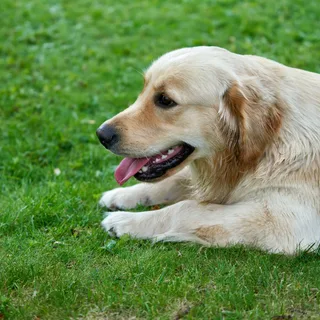
The Flat-Coated Retriever is a medium to large-sized dog, harmonious, powerful without heaviness and endowed with a lively and intelligent expression. Its head is long and well moulded, with a flat skull, dark brown to hazel eyes and small ears lying close to the head. Its coat is long and generous, especially on the limbs and the tail, dense, fine and lying flat. The coat colour is black or liver brown.
Temperament
Temperament and personality
Very affectionate, cheerful and gentle, the Flat-Coated Retriever is deeply attached to its family and is particularly sociable with children, strangers and other animals. It is not very independent, not very aggressive and retains a playful, enthusiastic and very friendly temperament, while keeping good natural abilities for hunting and retrieving.
Living together
Living with children and animals
Sporty and willing dog, the Flat-Coated Retriever needs long daily walks and regular exercise to stay balanced. He likes to swim, play and take part in family life. He can live in an apartment if his physical and mental needs are well met, but he thrives more in an active home with access to frequent outings.
Training
Training and socialization
His training must be based on consistency, calm firmness and positive reinforcement, without seeking confrontation. Lively and intelligent, he learns quickly thanks to play and rewards, which makes him a generally very obedient dog. On the other hand, his sensitivity and enthusiasm require a consistent and available owner.
Budget
Flat-Coated Retriever price & budget
The Flat-Coated Retriever remains a less widespread breed than other retrievers, which can affect the availability of puppies and waiting times. The price mainly depends on the seriousness of the breeding, the origins, the health monitoring of the parents and local demand.
View cost breakdownHealth
Health at a glance
The Flat-Coated Retriever is an overall robust dog, with good general resistance and an appetite often more moderate than that of other retrievers. This solid foundation does not rule out regular veterinary monitoring, as the breed also has certain well-known points of vigilance.
Prevention & watch pointsDiet
Feed it well
The Flat-Coated Retriever needs a complete, digestible diet adapted to its size, activity level and age. As it is an active dog, protein quality, energy density and digestive tolerance deserve particular attention.
Our feeding adviceDid you know?
Anecdotes and popularity
Less widespread than the Golden Retriever and the Labrador Retriever, the Flat-Coated Retriever is nevertheless an excellent retrieving dog and a very comfortable swimmer. Its elegant appearance and its playful temperament often earn it the image of a retriever that keeps for a long time the attitude of a big puppy.