Longevity
Life expectancy
With a life expectancy generally between 12 and 14 years, the Pudelpointer is in a good average for a dog of this size. This longevity depends on the quality of the selection, the level of activity, the weight maintained throughout life and regular veterinary follow-up.
Build
A robust breed?
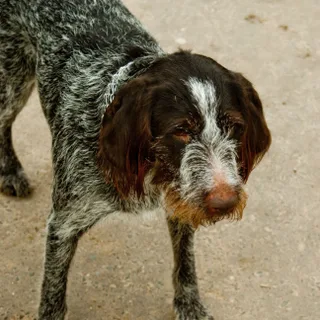
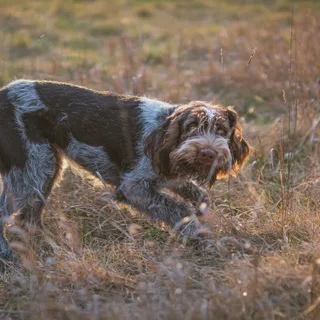
The Pudelpointer is an enduring, hardy dog and well suited to an active life. Its harsh coat combined with a thick undercoat offers it good protection against cold and humidity. Its robustness does not, however, eliminate the need for careful monitoring of the joints, skin and ears, especially in very heavily used dogs.
Watch points
What to watch for
Reasonable vigilance is required especially regarding the hips, the ears and certain neurological or dermatological disorders reported in the breed. Choosing a reputable breeder, regular ear care and maintaining good body condition are essential points to limit the risks.
Hip dysplasia : A joint malformation that can cause pain, lameness, and premature wear of the hip.
Epilepsy : Seizures may occur in some individuals and require rigorous veterinary monitoring.
Cryptorchidism : In some males, one or both testicles may not descend normally.
Otitis : The ears must be monitored, especially in an active dog in a humid environment, to limit inflammation and infections.
Calluses : Pressure skin lesions may form, especially in dogs that often lie down on hard surfaces.
Climate
Cold and heat tolerance
The Pudelpointer tolerates cold and humidity rather well thanks to its harsh coat and thick undercoat. It tolerates moderate heat correctly, but like any active, shaggy dog, it must avoid sustained exertion during the hottest hours and always have water and shade available.
Weight
Tendency to gain weight
Weight control is important to preserve the joints and maintain good physical performance. A ration adapted to the dog's actual activity, combined with substantial daily outings, helps to avoid excessive weight gain that is harmful in the long term.
Daily life
Good habits to keep it healthy
- Have the hips monitored in breeding dogs and remain attentive to locomotion.
- Check and dry the ears after outings in a humid environment.
- Maintain a stable weight to protect the joints.
- Consult promptly in case of a convulsive seizure, lameness, or persistent skin lesions.
Vaccination
Pudelpointer vaccines: vaccination schedule
Which vaccines for a Pudelpointer? Like all cats, the Pudelpointer receives essential vaccines from 8 weeks old: Typhus (panleukopenia) and Coryza. The kitten primary vaccination for Pudelpointer is given in several injections 4 weeks apart, followed by a first booster at 1 year, even if it lives in an apartment. Depending on its lifestyle (outdoor access, multi-cat household, shows, travel), your veterinarian may complete the protocol with vaccines against Feline leukemia (FeLV), Rabies and Chlamydiosis.
| Vaccine | Primary series | First booster | Then | Who for? |
|---|---|---|---|---|
Typhus (panleukopenia)Core Feline panleukopenia (cat parvovirus) | 8 weeks · 12 weeks · 3 months | 1 year | every year | All pets |
CoryzaCore Feline herpesvirus and calicivirus | 8 weeks · 12 weeks · 3 months | 1 year | every year | All pets |
Feline leukemia (FeLV)Lifestyle-based Feline leukemia virus | 8 weeks · 12 weeks | 1 year | every year | Outdoor cats, cats living in a group or in a cattery |
RabiesLifestyle-based Rabies | 12 weeks | 1 year | every year | Mandatory for travel abroad, cat shows and most boarding kennels |
ChlamydiosisLifestyle-based Chlamydia felis (contagious conjunctivitis) | 8 weeks · 12 weeks | 1 year | every year | Cats living in groups, catteries, show cats |
Adult Pudelpointer vaccine boosters are annual for cat flu and leukemia if it goes outdoors; for panleukopenia, a booster every three years is often sufficient after the first booster. Your veterinarian will adjust the schedule to your cat’s lifestyle.
Which boosters for your Pudelpointer?
Enter your companion’s age: we list the vaccines to do now and the next boosters.
Adopting well
Adopting a healthy Pudelpointer
Hip screening is particularly relevant in this breed. Regular veterinary follow-up, combined with careful observation of locomotion, skin condition and ear health, helps to detect early problems likely to affect a working dog.
This information is provided for guidance only and does not replace a veterinarian’s advice. If you have any concerns about your pet’s health, consult a professional.