Origins
Where does it come from?
The Petit Epagneul de Münster descends from the long-haired Oysel dogs of the Münster region, developed in the second half of the 19th century. Its development is part of the selection of versatile pointing dogs capable of working on different terrains. The Association of Petit Münster Pointing Dogs was founded in 1912, then a first standard was established in 1921 by Dr Friedrich Jungklaus.
Appearance
What does it look like?
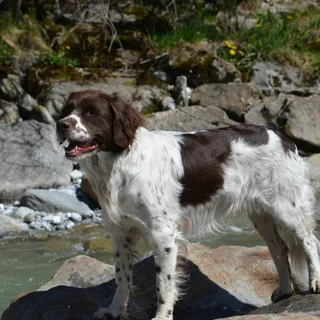
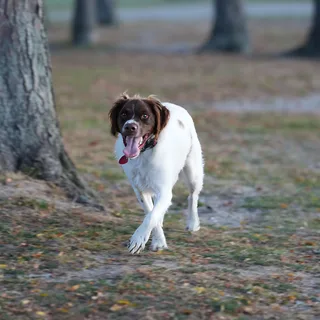
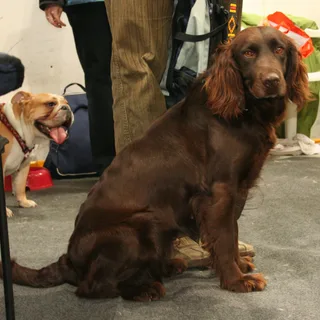
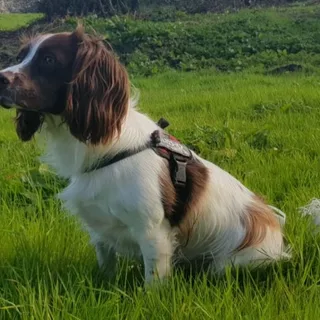
The Petit Epagneul de Münster is a medium-sized dog, harmoniously built, slightly longer than tall, with a noble and flowing silhouette. Its coat is brown and white bicolour, often speckled, with a medium-length, dense coat, smooth to slightly wavy, which protects well against moisture and minor injuries. The ears are set high and end in a point, the eyes are preferably dark brown, and the tail, well feathered, is carried horizontally in action.
Temperament
Temperament and personality
The Petit Epagneul de Münster is a well-balanced, social and friendly dog. Very attached to its owner, it enjoys working in cooperation and shows willingness in the field. Its temperament combines everyday affection, practical intelligence and a true passion for hunting.
Living together
Living with children and animals
Active and hardy, the Petit Epagneul de Münster needs a life rich in outings and stimulation. He likes to explore, sniff and move about in natural environments. In the family, he is pleasant and close to his own, but his well-being depends on a dynamic lifestyle and time spent with his human.
Training
Training and socialization
The Petit Münsterländer learns quickly when it is encouraged with consistency and kindness. Positive methods, based on motivation and reward, are particularly well suited to this sensitive and cooperative breed. Recall must be worked on early, because its hunting instinct can lead it to follow a trail with enthusiasm.
Budget
Small Münsterländer price & budget
The price of a Petit Epagneul de Münster varies depending on the quality of the breeding, the origins, the selection of breeding dogs and the follow-up offered. Beyond the purchase cost, you should plan a regular budget for food, veterinary care and the routine upkeep of an active dog.
View cost breakdownHealth
Health at a glance
The Petit Epagneul de Münster is overall a robust and resilient dog. Its coat provides good protection against bad weather and outdoor work, which makes it a companion well suited to an active life. No particular pathological predisposition stands out clearly in the reference consulted, but regular veterinary follow-up remains essential as for any sporting dog.
Prevention & watch pointsDiet
Feed it well
The Petit Epagneul de Münster needs a complete, good-quality diet, adapted to its age, its size and above all to its activity level. A dynamic dog, it must receive a ration that supports effort without promoting overweight.
Our feeding adviceDid you know?
Anecdotes and popularity
Also called Petit Munsterlander or Kleiner Münsterländer, this dog of German origin is appreciated for its versatility in hunting and for its ability to work seriously without losing its close contact with its handler. Its elegant appearance does not prevent it from being a true field dog, hardy and diligent.