Origins
Where does it come from?
The Pixie-bob was developed in the United States starting in the 1980s, notably in the American Northwest, from domestic cats with a lynx type. Carol Ann Brewer popularized the line from a female cat named Pixie. Stories of hybridization with the bobcat circulated for a long time, but modern registries, including TICA, consider it a domestic cat selected for its wild appearance. The breed was recognized by TICA in the late 1990s.
Appearance
What does it look like?
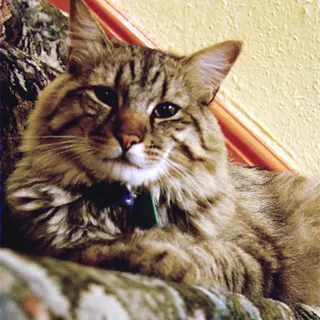
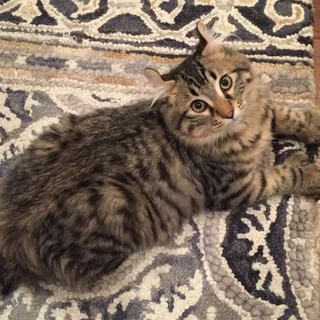
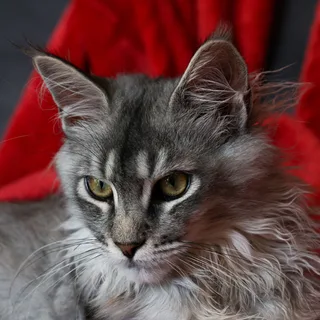
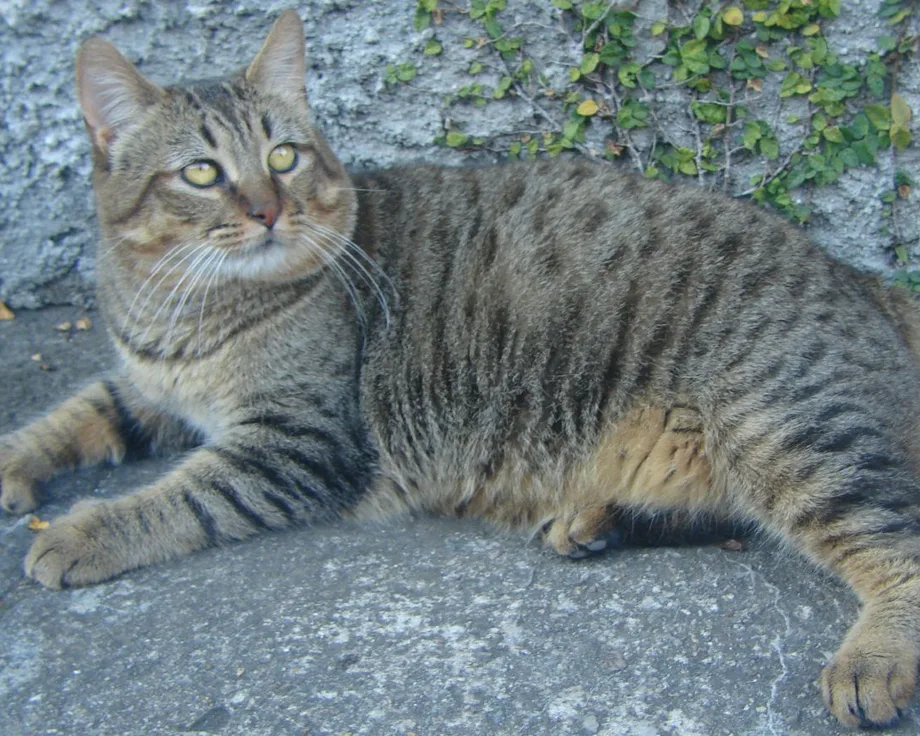
The Pixie-bob is an imposing cat, deeply built, with heavy bone structure and powerful musculature. The head is broad, pear-shaped in reverse, with pronounced eyebrows, ears sometimes tufted and slightly slanted almond-shaped eyes. The tail is naturally short, ideally fairly thick and mobile, without reaching the length of a full tail. The coat, short or semi-long, is dense and woolly, most often brown spotted tabby with ticking that evokes the lynx. Polydactyly is common and accepted by several standards.
Temperament
Temperament and personality
The Pixie-bob is known for its dog-like attachment: it often follows its humans, seeks contact and integrates very well into family life. Calm at home when it has enough activity, it remains curious, intelligent and not very aggressive. It is particularly appreciated with respectful children.
Living together
Living with children and other pets
On a daily basis, he likes to observe, play hunting games and stay close to his loved ones. He often vocalizes with clicks, trills or a chirp rather than with shrill meows. He adapts to apartment living if he has vertical space, games and a regular presence. Secure access to the outdoors enriches his life but is not essential.
Training
Training and socialization
Intelligent and cooperative, the Pixie-bob easily learns recall, targeting and a few tricks through positive reinforcement. Consistency, play and measured food rewards work better than any constraint. Early socialization to handling, transport and other animals makes adult life easier.
Budget
Price and budget for the Pixie-bob
The Pixie-bob remains quite rare in Europe, which keeps breeding prices often between €1,000 and €2,000. Type, polydactyly, long hair and the quality of socialization influence the price. You should also plan for the routine upkeep of a large indoor cat.
See cost breakdownHealth
Health at a glance
The Pixie-bob is generally considered a robust cat, originating from a fairly natural base. Like any large-format cat, it deserves attention to the joints, weight and urinary function. The short tail results from a mutation distinct from that of the Manx; reputable lines avoid the extremes associated with neurological disorders.
Prevention and things to watch forNutrition
Feeding your pet well
Large, muscular cat, the Pixie-bob needs a complete diet, rich in animal proteins and adjusted to its ideal weight. Quality kibble or a mixed diet are suitable, provided that energy is controlled.
Our feeding adviceDid you know?
Fun facts and popularity
The name Pixie-bob comes from the founding cat Pixie and from the short tail (bob). Many individuals have more than five toes per paw, a trait sought after in the breed. Despite its look of a small lynx, it is not a wild hybrid: it is a companion cat selected for this type.