A menu for every age
Needs change over time
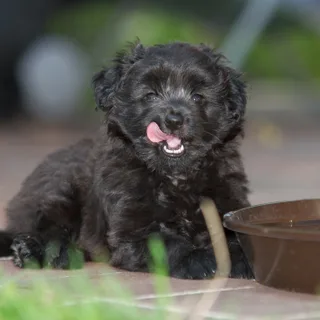
Puppy : Growth must be slow and controlled, with a diet formulated for a large or very large breed puppy in order to limit excess energy.
Adult : The ration must cover maintenance without promoting overweight, ideally in 2 well-spaced daily meals.
Senior : A more digestible formula, moderate in calories and supporting the joints helps preserve its mobility and comfort.
Which food?
Kibble, wet food, or home-cooked diet?
A complete premium diet formulated for large or very large dogs generally suits the Spanish Mastiff well. The levels must remain consistent with its age, activity level and body condition, with particular attention to digestibility and osteoarticular support.
Amounts
How much should you give?
Quantities must be adjusted according to the weight, age, neutering, activity and energy density of the chosen food. For a dog of this size, it is preferable to consult with the veterinarian or follow the manufacturer's recommendations rather than apply a standard ration that is too approximate.
| Weight | Daily amount | Meals/day |
|---|---|---|
| 65 - 83 kg | 939 - 1266 g | 2 |
| 83 - 102 kg | 1160 - 1560 g | 2 |
| 102 - 120 kg | 1380 - 1853 g | 2 |
Change
Managing the food transition
Any change in diet must be made gradually over several days in order to limit digestive upsets. A slow transition is particularly important in a giant dog, often more sensitive to sudden changes in ration or feeding schedule.
Hydration
Water: do not overlook it
Clean, fresh water must remain available at all times. In hot weather, after the walk or when feeding dry food, hydration must be monitored particularly closely, without encouraging too rapid an intake just before or just after exertion.
Little extras
Treats, in moderation
Treats should remain occasional and be included in the calculation of the daily ration. In the Spanish Mastiff, it is better to favor simple, low-calorie rewards to avoid a gradual weight gain that is often underestimated.
Good habits
For a top-notch bowl
- Split the daily ration into at least 2 meals
- Avoid intense exertion just before and just after meals
- Weigh the dog regularly and adjust the ration if necessary
Never give
Chocolate, grapes, onion, garlic, avocado, alcohol, xylitol, cooked bones and very fatty foods should be avoided, as they can cause poisoning, severe digestive disorders or worsen the risk of gastric dilatation-volvulus.