Origins
Where does it come from?
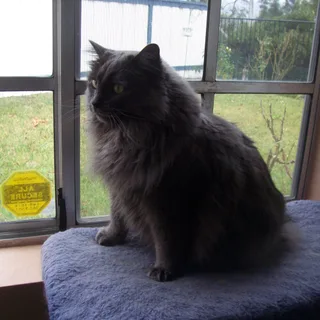
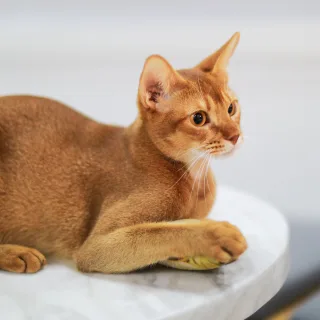
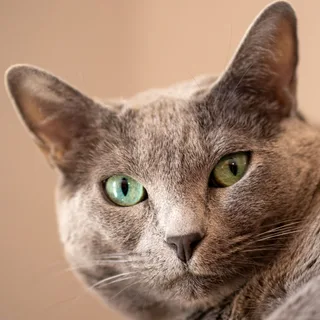
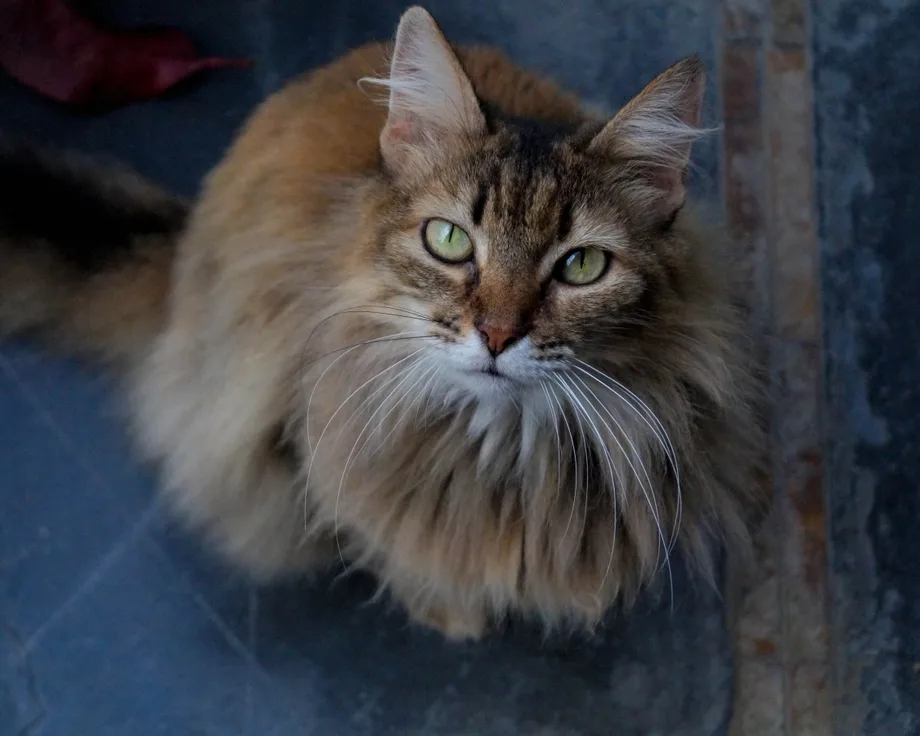
Originally from the Isle of Man, between England and Ireland, the Manx has long been known for its lack of a tail, due to a spontaneous genetic mutation. The breed was shown in exhibitions in the 19th century, then enjoyed real success in North America. Its semi-long-haired variety is known as the Cymric.
Appearance
What does it look like?
The Manx is a compact, muscular and powerful cat, with a cobby build. Its rounded body, arched back and hind legs longer than the front legs give it a very distinctive silhouette. Its head is broad and round, its eyes are large and well spaced, and its short coat is dense, silky and double. Depending on the individual, the tail is absent or very short.
Temperament
Temperament and personality
The Manx is a very affectionate, loyal cat and close to its owner. It enjoys family life, tolerates the presence of children well and generally cohabits well with other animals. However, it can be reserved with strangers and keep a small protective side.
Living together
Living with children and other pets
Lively, playful and intelligent, the Manx needs daily stimulation to stay balanced. It likes to climb, explore and take part in household life. Although it can live in an apartment, it also appreciates secure access to a small outdoor space. It does not tolerate boredom well and readily seeks human company.
Training
Training and socialization
The Manx responds well to gentle, consistent training based on reward. Its intelligence allows it to quickly learn certain routines and small exercises. It is important to offer it games, scratching posts and observation posts in order to channel its energy and avoid frustration.
Budget
Price and budget for the Manx
The purchase price of a Manx varies mainly depending on the quality of the lineage, the reputation of the breeding cattery and the rarity of the breed. It is essential to favor a serious breeder, able to document the health and selection of their breeding cats.
See cost breakdownHealth
Health at a glance
The Manx is generally a robust cat, but its characteristic genetic mutation requires particular vigilance. The absence or reduction of the tail may be accompanied in some individuals by developmental abnormalities that justify serious selection by the breeder and careful veterinary monitoring.
Prevention and things to watch forNutrition
Feeding your pet well
The Manx is satisfied with a quality industrial diet, complete and suited to its profile. Its needs vary according to age, activity level and sterilization. Monitoring quantities is important to limit the risk of overweight.
Our feeding adviceDid you know?
Fun facts and popularity
The Manx exists in several forms depending on the length of the residual tail, from the completely tailless subject to the cat that retains an almost complete one. Only certain types are accepted in shows. The breed is also at the origin of the Cymric, which is its semi-long-haired version.