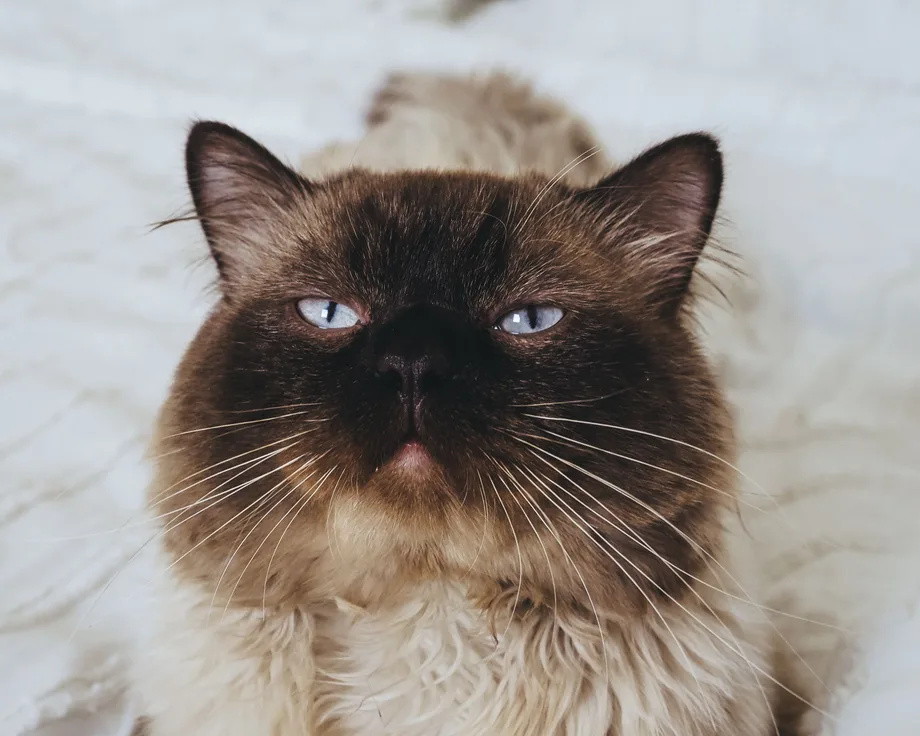
Longevity
Life expectancy
With attentive care, a suitable diet and good medical follow-up, the Himalayan can live from 12 to 17 years. Longevity depends on the quality of the breeding, the lifestyle and hereditary predispositions.
Constitution
Is this a robust breed?
Not very hardy. Care and monitoring make the difference between a comfortable cat and a cat in difficulty. An exclusively indoor life, well managed, suits him.
Things to watch for
What to look out for
Breathing, tearing, teeth, thirst, appetite, knots, constipation linked to hair. A respiratory change in hot weather is an alert.
Polycystic kidney disease: As with the Persian, PKD screening is strongly recommended.
Breathing: Very flat faces breathe less well, especially in hot weather or when overweight.
Tearing: The eyes must be cleaned regularly.
Teeth: The small mouth promotes tartar and crowding.
Climate
Tolerance to cold and heat
Uncomfortable in high heat, especially if the nose is very short. Temperate indoors, never in a closed car in the sun.
Weight
Prone to weight gain
The Himalayan must maintain a silhouette suited to its morphology, with palpable ribs without excess. The ration must match the actual activity, age and neutering. Regular weighing prevents overly significant variations.
Everyday care
Good habits to keep your pet healthy
- Brush very regularly to avoid knots.
- Clean the eyes as soon as they start to run.
- Monitor breathing in hot weather.
- Ask for the parents' PKD status.
Vaccination
Himalayan vaccinations: schedule
Which vaccines does a Himalayan need? Like all cats, Himalayans should receive their core vaccines from 8 weeks of age: Typhus (panleukopenia) and Coryza. Kittens receive their initial Himalayan vaccinations in several shots spaced 4 weeks apart, followed by a first booster at 1 year, even if they live indoors. Depending on their lifestyle (outdoor access, living with other cats, shows, travel), your veterinarian may add vaccines against Feline leukemia (FeLV), Rabies and Chlamydiosis.
| Vaccine | Primary vaccination | First booster | Then | For whom? |
|---|---|---|---|---|
Typhus (panleukopenia)Core Feline panleukopenia (cat parvovirus) | 8 weeks · 12 weeks · 3 months | 1 year | every year | All animals |
CoryzaCore Feline herpesvirus and calicivirus | 8 weeks · 12 weeks · 3 months | 1 year | every year | All animals |
Feline leukemia (FeLV)Depending on lifestyle Feline leukemia virus | 8 weeks · 12 weeks | 1 year | every year | Outdoor cats, cats living in a group or in a cattery |
RabiesDepending on lifestyle Rabies | 12 weeks | 1 year | every year | Mandatory for travel abroad, cat shows and most boarding kennels |
ChlamydiosisDepending on lifestyle Chlamydia felis (contagious conjunctivitis) | 8 weeks · 12 weeks | 1 year | every year | Cats living in groups, catteries, show cats |
Adult Himalayan booster shots are given annually for feline herpesvirus and feline leukemia if your cat goes outdoors. For feline panleukopenia, a booster every three years is often enough after the first booster. Your veterinarian will tailor the schedule to your cat's lifestyle.
Which boosters does your Himalayan need?
Enter your companion's age to see which vaccines are due now and when the next boosters are needed.
Choosing well
Adopting a healthy Himalayan
PKD, kidneys, eyes, teeth, breathing. Ask for the breeders' tests. Prefer a less flat type.
This information is for guidance only and doesn't replace advice from a veterinarian. If you have any concerns about your pet's health, consult a professional.