Origins
Where does it come from?
The Griffon Nivernais probably descends from the dogs of the Hautes-Pyrénées and the old Grey Hounds of Saint-Louis, now extinct. Long present in the French royal packs, it experienced a sharp decline before being preserved by enthusiasts from the Nivernais. Contributions of English Foxhound, Otterhound and Griffon Vendéen at the end of the 19th century and at the beginning of the 20th century brought it closer to the current type. The breed club was founded in 1925 and the FCI definitively recognized it in 1959.
Appearance
What does it look like?
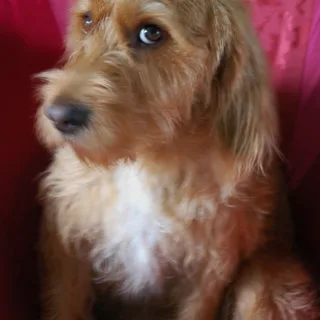
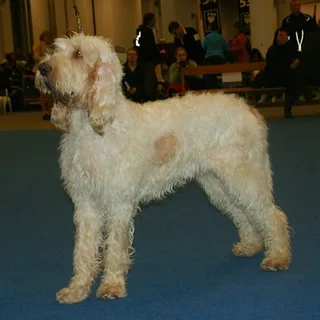
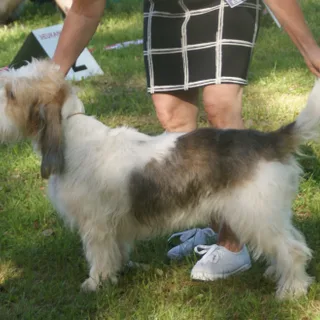
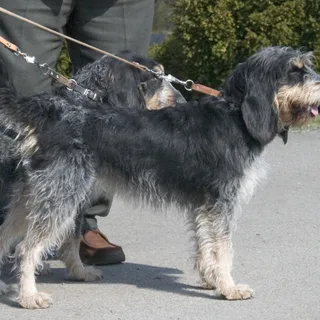
The Griffon Nivernais is a medium-sized dog, with a lean appearance, rustic and well built for endurance. Its body is slightly longer than tall, with a solid back, lean musculature and a chest without heaviness. Its coat is long, bushy, thick and rather harsh, with full eyebrows and a slight beard. Its colour is most often black grizzled on a fawn background more or less dark, sometimes with a few scattered white hairs or a small white spot on the chest.
Temperament
Temperament and personality
Lively, courageous and enterprising, the Griffon Nivernais is an energetic dog with a good sense of initiative. It is particularly appreciated for hunting, especially wild boar, and proves to be enduring, never fearful and fairly autonomous in its work. With the family, it can be attached to its owner and pleasant to live with, even if it retains an independent and sometimes stubborn temperament.
Living together
Living with children and animals
The Griffon Nivernais needs space, activity and long, regular outings to remain balanced. It is not suited to urban life or apartment living and thrives better in an open environment, with frequent access to nature. It is a dog that likes to move, explore and use its natural hunting abilities.
Training
Training and socialization
His training must be early, consistent and firm without harshness, because the Griffon Nivernais can show himself to be strong-willed. Good socialization from the youngest age is important to channel his independence and promote a harmonious life in the family. Motivated by short and regular sessions, he learns correctly, but requires more consistency than a dog that is naturally very docile.
Budget
Griffon Nivernais price & budget
The purchase price of the Griffon Nivernais varies depending on the quality of the bloodline, the reputation of the breeding kennel, the pedigree, health monitoring, and whether the dog is intended for hunting or companionship. Its relative rarity can also influence the availability of puppies.
View cost breakdownHealth
Health at a glance
Rustic and generally robust, the Griffon Nivernais has no known major predisposition to many specific diseases. Its active life and outdoor lifestyle mainly require practical vigilance regarding the ears, the condition of the coat, the skin and recovery after exertion.
Prevention & watch pointsDiet
Feed it well
The Griffon Nivernais needs a complete and highly digestible diet, suited to its medium size and its often sustained activity level. The ration must be adjusted according to age, season, the frequency of outings and the intensity of work or hunting.
Our feeding adviceDid you know?
Anecdotes and popularity
The Griffon Nivernais almost disappeared before being saved by enthusiasts from its region of origin. Its somewhat rough appearance and serious expression contrast with its drive in the field. It is a historic French breed, especially recognized for its qualities as an enduring and courageous scenthound.