Origins
Where does it come from?
The Dogue de Majorque descends from the ancient mastiffs of the Iberian Peninsula introduced into the Balearic Islands by Catalan and Spanish sailors. Formerly used for hunting, guarding and fights now prohibited, it is also known under the name Ca de Bou, that is to say "bull dog" in Catalan. The breed was entered in the Spanish Stud Book in 1929 then definitively recognized by the FCI in 1963.
Appearance
What does it look like?
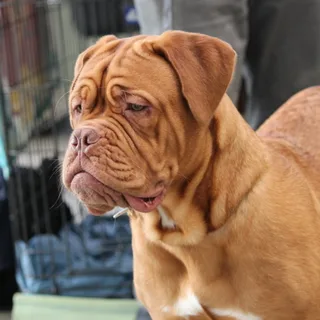
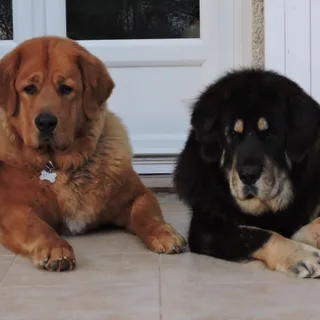
The Dogue de Majorque is a solidly built molossoid dog, of medium to large size, with a body slightly longer than tall. Its head is powerful and massive, its neck thick, its bone structure strong and its tail set low. Its coat is short and harsh, and the coat color is most often brindle, fawn or black, sometimes with a few white markings and a black mask.
Temperament
Temperament and personality
Courageous, determined and very vigilant, the Dogue de Majorque is above all a guard and protection dog. With its family, it is affectionate, stable and rather calm when it is well socialized. Its reserve towards strangers and its protective instinct require a clear framework and a consistent handler.
Living together
Living with children and animals
On a daily basis, the Dogue de Majorque likes to live close to its family but is not a demonstrative dog all the time. It observes a lot, reacts with composure and prefers to have space rather than remain confined. Regular walks and a balanced family life help it stay calm and comfortable in its paws.
Training
Training and socialization
His training must be conducted with firmness, consistency and calm, without seeking a power struggle. Early socialization is essential to channel his natural wariness and teach him the right boundaries. This is not the easiest breed for a beginner, but it responds better to a fair, stable and experienced owner.
Budget
Majorca Mastiff price & budget
The purchase price of the Dogue de Majorque varies depending on the lineage, the reputation of the breeding kennel, compliance with the standard and the follow-up provided with the puppy. This breed remains relatively rare, which can also influence the acquisition budget.
View cost breakdownHealth
Health at a glance
The Dogue de Majorque is a rather hardy and resilient dog overall. Its heavy build nevertheless requires monitoring its physical condition, its weight and the quality of its exertion so as not to overload the musculoskeletal system.
Prevention & watch pointsDiet
Feed it well
The Dogue de Majorque needs a complete and well-balanced diet, adapted to its size, its age and its activity level. The quality of the ration matters as much as the quantity to support its muscle mass without promoting weight gain.
Our feeding adviceDid you know?
Anecdotes and popularity
The Dogue de Majorque is also known as the Ca de Bou. This Catalan name recalls its ancient history in the Balearic Islands and its past use against bulls. Today, the breed is mainly appreciated for its courage, its deterrent presence and its loyalty to its family.