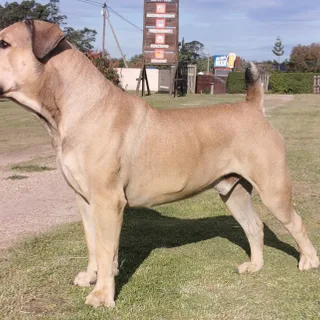
A menu for every age
Needs change over time
Puppy : Growth food adapted to the expected size, divided into three meals, without unnecessary calcium supplementation.
Adult : Controlled ration in two meals, adjusted to ideal weight and actual activity.
Senior : Digestible food, possibly less energy-dense, with joint and dental monitoring.
Which food?
Kibble, wet food, or home-cooked diet?
Quality kibble for large dogs, controlled growth in the young, without seeking artificial mass.
Amounts
How much should you give?
The daily amount must be adapted to the dog's weight, age and activity level, without overly intensive exercise during growth in order to preserve its joints.
| Weight | Daily amount | Meals/day |
|---|---|---|
| 40 - 46 kg | 564 - 765 g | 2 |
| 46 - 51 kg | 632 - 856 g | 2 |
| 51 - 57 kg | 700 - 946 g | 2 |
Change
Managing the food transition
Any change of food must be gradual over seven to ten days in order to limit diarrhea and loss of appetite, especially during hunting season.
Hydration
Water: do not overlook it
Permanent water, frequent breaks during exertion, vigilance in the heat: the massive build dissipates temperature poorly.
Little extras
Treats, in moderation
Measured treats, deducted from the ration. Avoid any mass gain supplement without veterinary advice.
Good habits
For a top-notch bowl
- Weigh the ration each day rather than serving by volume.
- Avoid intense exertion just before and after the meal.
- Deduct training treats from the daily ration.
Never give
Chocolate, grapes, xylitol, onion, garlic, alcohol, caffeine, cooked bones and very fatty leftovers are dangerous. In case of ingestion, contact a veterinarian.