Origins
Where does it come from?
The Dandie-Dinmont-Terrier is an ancient breed originating from the Borders region, in southern Scotland and northern England. It was selected for hunting rabbits, otters and various pests, which explains its courage, determination and its low, elongated silhouette. Its fame took off after the publication in 1815 of the novel Guy Mannering by Sir Walter Scott, in which a character owned several terriers of this type. The breed then kept this name, which became unique in the canine world, and was then definitively recognized by the FCI in 1955. Today, it remains rare, with modest numbers.
Appearance
What does it look like?
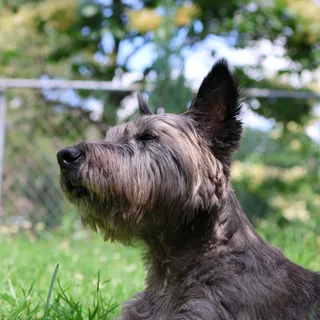
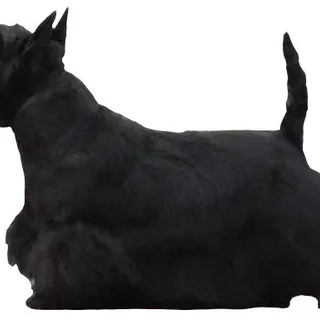
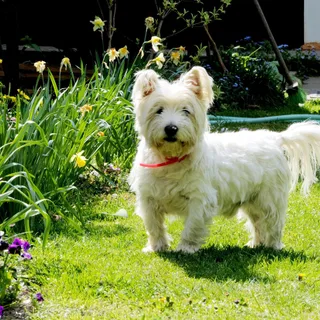
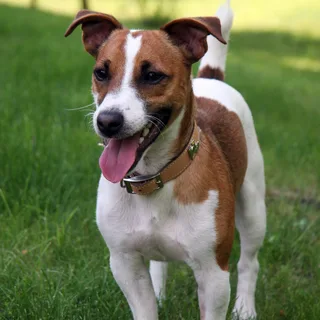
The Dandie-Dinmont-Terrier is a small dog low on legs, with an elongated body, strong and supple. Its neck is muscular, its back slightly arched and its chest well let down. The head, broad and powerful but proportionate, is covered with a characteristic silky coat. The eyes are large, round and dark, with a lively and intelligent expression, while the drooping ears are set low. The tail, strong at the base, is carried gaily in a scimitar shape. Its double coat combines a fairly harsh outer coat with a softer undercoat, with fringes on the limbs, and the coat comes in pepper or mustard colours.
Temperament
Temperament and personality
The Dandie-Dinmont Terrier retains the terrier spirit, with spring, determination and a real capacity for initiative. It is affectionate with its own, intelligent and generally well-balanced, while keeping a degree of independence and a strong character. It is not a noisy dog by nature, but it remains vigilant and courageous.
Living together
Living with children and animals
On a daily basis, the Dandie-Dinmont-Terrier appreciates a regular life, daily outings and a calm but stimulating environment. He can live in an apartment if he is taken out enough, even if repeated stairs are not ideal for his back and joints. Playful without being hyperactive, he likes to take part in household life, explore and follow scents, with a hunting instinct that can resurface when faced with small animals.
Training
Training and socialization
His training must begin early, with clear rules, consistency and careful socialization. The Dandie-Dinmont-Terrier can be stubborn, which requires patience and firm but always gentle handling. Brutal methods are to be avoided. Short, consistent and motivating sessions give better results than an overly repetitive approach.
Budget
Dandie Dinmont Terrier price & budget
The price of a Dandie-Dinmont-Terrier varies depending on the lineage, the seriousness of the breeding, the screenings and the socialization. The maintenance budget (food, veterinary care, training) often exceeds the purchase price over time.
View cost breakdownHealth
Health at a glance
Rustic and generally robust, the Dandie-Dinmont Terrier copes rather well with bad weather thanks to its double coat. Like many low and elongated dogs, it nevertheless deserves special attention for its back, its joints and certain breed predispositions. Regular veterinary monitoring, good weight management and moderate activity help to preserve its health.
Prevention & watch pointsDiet
Feed it well
The Dandie-Dinmont Terrier needs a complete, digestible diet adapted to its small size, its age and its activity level. Good-quality food helps support muscle mass, coat condition and the maintenance of a stable weight.
Our feeding adviceDid you know?
Anecdotes and popularity
The Dandie-Dinmont Terrier is one of the rare dog breeds whose name comes from a fictional character. Its original silhouette, its pepper or mustard coats and its very distinctive expression make it immediately recognizable. Despite its sometimes peaceful appearance, it descends from true little hunters used to pursue tough prey in difficult terrain. The breed remains uncommon today, which makes it a rather confidential companion.