Origins
Where does it come from?
Of British origin, the Fox Terrier is among the oldest terrier breeds. It was selected for fox and vermin hunting, with the desired qualities being speed, courage, determination and a fairly compact size to work in the den. The first breed standard was written in 1876 and today two varieties are distinguished, smooth-haired and wire-haired, both of which have also become popular companion dogs.
Appearance
What does it look like?
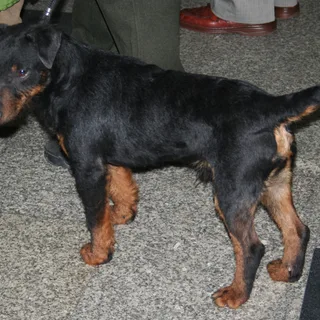
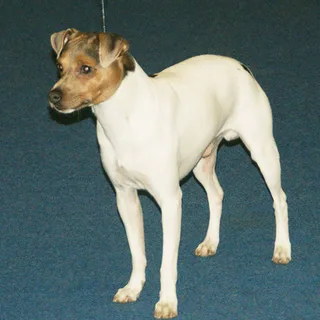
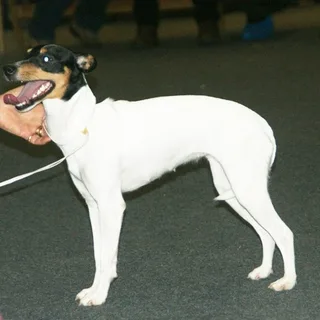
The Fox Terrier is a small harmonious, lively and proud dog, built for action. Its back is short and solid, its chest well let down without being wide, and its elongated head carries V-shaped ears falling forward. The coat is predominantly white with tan and/or black markings. Depending on the variety, the coat is either smooth, straight and dense, or harsh and wiry with a more pronounced beard and moustache.
Temperament
Temperament and personality
The Fox Terrier is a dog brimming with energy, alert, courageous and intelligent. Very playful, it is affectionate with its family and particularly enjoys shared activities. Its hunting instinct nevertheless remains pronounced, as does its strong-willed temperament, which makes it a lively and determined companion rather than a placid dog.
Living together
Living with children and animals
On a daily basis, the Fox Terrier needs to move, explore and be mentally stimulated to stay balanced. He likes to keep an eye on his environment, can be prone to barking if nothing channels his energy and copes poorly with boredom. His relationship with other animals depends greatly on early socialization, because he readily tends to want to take the upper hand and to chase small animals.
Training
Training and socialization
The Fox Terrier requires a firm, consistent and early education, without brutality. It is an intelligent but stubborn dog, which easily tests limits if the framework lacks consistency. Careful socialization, stable rules and work based on motivation, play and rewards make it possible to obtain a pleasant and better controlled dog.
Budget
Fox Terrier price & budget
The purchase price of the Fox Terrier varies mainly depending on the lineage, the reputation of the breeding kennel, compliance with the standard and the follow-up offered. It is also preferable to think in terms of annual maintenance cost, because this active terrier requires proper food, preventive care and sometimes more regular grooming in the wire-haired version.
View cost breakdownHealth
Health at a glance
The Fox Terrier is overall a resilient dog and rather robust for its size. Like many active terriers, it benefits above all from a regular lifestyle, a stable weight and preventive veterinary follow-up. Particular vigilance remains useful on certain orthopedic, ocular, cardiac and digestive points reported in the breed.
Prevention & watch pointsDiet
Feed it well
The Fox Terrier needs a complete, digestible diet adapted to its activity level. Good-quality kibble, given in measured portions, generally suits this lively terrier very well, as it expends a lot of energy on a daily basis.
Our feeding adviceDid you know?
Anecdotes and popularity
The name Fox Terrier recalls its historical function as a fox specialist, which it had to flush out right into its den. The breed is often associated with an elegant look of a small hunting dog, proud and always alert. The two varieties, smooth-haired and wire-haired, share the same lively temperament, even if their maintenance differs clearly.