Longevity
Life expectancy
It generally lives from 12 to 14 years. An appropriate diet, maintaining a healthy weight, regular activity and preventive screenings help preserve its mobility and quality of life over the years.
Build
A robust breed?
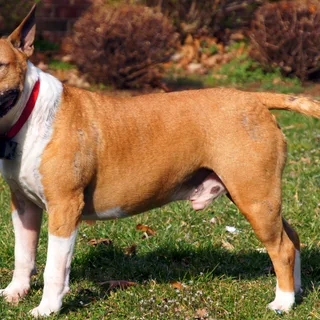
Its musculature, short coat and solid build give it good overall endurance. It tolerates moderate heat fairly well, but its poorly insulating coat protects it less from damp or prolonged cold. Intense exertion must be limited during growth in order to preserve the joints and the limbs’ alignment.
Watch points
What to watch for
Monitoring should focus on gait, balance, vision, hearing, skin, weight and any unusual change in behavior or activity level. Choosing a breeder that carries out the recommended screenings reduces the risk of passing on certain conditions.
Hereditary cerebellar ataxia : This progressive neurological degeneration impairs balance and coordination; DNA testing of breeding dogs helps limit transmission.
Hip and elbow dysplasia : These joint abnormalities can cause pain, lameness and osteoarthritis; radiographic screening and controlled growth are recommended.
Hypothyroidism : A hormonal deficiency can lead to fatigue, weight gain and skin disorders; diagnosis is based on a veterinary work-up.
Eye disorders : Progressive retinal atrophy and cataracts can impair vision and justify ophthalmologic follow-up.
Deafness : Congenital deafness can occur, notably in certain lines or very white coats; a BAER hearing test makes it possible to confirm it.
Skin disorders : Allergies and demodicosis can cause itching, redness and hair loss and require an accurate diagnosis.
Urinary stones : Crystals or stones can cause pain and difficulty urinating; any urinary issue requires a prompt consultation.
Patellar luxation : A displacement of the kneecap can cause an intermittent abnormal gait and, depending on its severity, require treatment.
Climate
Cold and heat tolerance
He tolerates heat fairly well if exercise is avoided during the hottest hours and if water and shade remain available. His short coat offers little protection against cold, wind and humidity: winter outings must be adapted, with drying on return and additional protection if necessary.
Weight
Tendency to gain weight
His appetite and musculature must not lead to overfeeding. The ration is adjusted according to weight, age, neutering and activity, by regularly monitoring the silhouette. The ribs must remain palpable without being visible from a distance. Treats are included in the daily intake and activity increases gradually, particularly in the young dog.
Daily life
Good habits to keep it healthy
- Have the hips, elbows, eyes, heart and thyroid checked according to veterinary advice.
- Check the genetic status of breeding dogs for cerebellar ataxia.
- Limit jumping and intense exertion during growth.
- Inspect the ears, eyes, skin and paw pads every week.
- Brush the teeth regularly and have the nails trimmed if necessary.
- Keep vaccines, antiparasitics and preventive visits up to date.
Vaccination
American Staffordshire Terrier vaccines: vaccination schedule
Which vaccines for a American Staffordshire Terrier? Like all cats, the American Staffordshire Terrier receives essential vaccines from 8 weeks old: Typhus (panleukopenia) and Coryza. The kitten primary vaccination for American Staffordshire Terrier is given in several injections 4 weeks apart, followed by a first booster at 1 year, even if it lives in an apartment. Depending on its lifestyle (outdoor access, multi-cat household, shows, travel), your veterinarian may complete the protocol with vaccines against Feline leukemia (FeLV), Rabies and Chlamydiosis.
| Vaccine | Primary series | First booster | Then | Who for? |
|---|---|---|---|---|
Typhus (panleukopenia)Core Feline panleukopenia (cat parvovirus) | 8 weeks · 12 weeks · 3 months | 1 year | every year | All pets |
CoryzaCore Feline herpesvirus and calicivirus | 8 weeks · 12 weeks · 3 months | 1 year | every year | All pets |
Feline leukemia (FeLV)Lifestyle-based Feline leukemia virus | 8 weeks · 12 weeks | 1 year | every year | Outdoor cats, cats living in a group or in a cattery |
RabiesLifestyle-based Rabies | 12 weeks | 1 year | every year | Mandatory for travel abroad, cat shows and most boarding kennels |
ChlamydiosisLifestyle-based Chlamydia felis (contagious conjunctivitis) | 8 weeks · 12 weeks | 1 year | every year | Cats living in groups, catteries, show cats |
Adult American Staffordshire Terrier vaccine boosters are annual for cat flu and leukemia if it goes outdoors; for panleukopenia, a booster every three years is often sufficient after the first booster. Your veterinarian will adjust the schedule to your cat’s lifestyle.
Which boosters for your American Staffordshire Terrier?
Enter your companion’s age: we list the vaccines to do now and the next boosters.
Adopting well
Adopting a healthy American Staffordshire Terrier
Before breeding, it is advisable to request the screening results for hip and elbow dysplasia, hereditary cerebellar ataxia, as well as an ophthalmological examination and a cardiac check. An evaluation of the thyroid and hearing can complete the assessment depending on the bloodlines and the veterinarian's recommendations.
This information is provided for guidance only and does not replace a veterinarian’s advice. If you have any concerns about your pet’s health, consult a professional.