Origins
Where does it come from?
The Danish-Swedish Farmdog (Dansk-Svensk Gårdshund) is a traditional farm dog from Denmark and southern Sweden, notably Scania. For centuries, it served to do everything on the farm: hunt rats, guard the yard, accompany hunters and help gather livestock. Having become rare with the mechanization of agriculture, it was saved in the 1980s by the Danish and Swedish kennel clubs, which recognized it in 1987. The FCI then admitted it under number 356, in group 2 of pinschers and schnauzers.
Appearance
What does it look like?
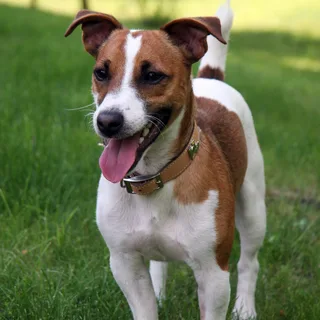
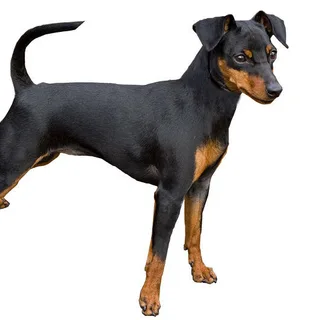
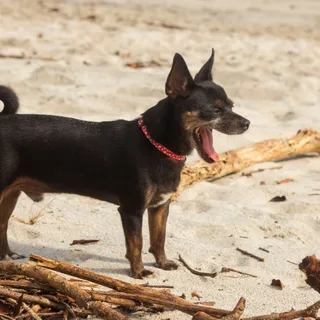
It is a small compact and rectangular dog, 30 to 39 cm at the withers for approximately 7 to 12 kg. The head is triangular, the ears drooping or semi-erect, the eyes dark and lively. The tail may be long or naturally shortened. The coat is short, smooth and somewhat harsh. The coat is predominantly white with black, fawn, brown or tricolour patches.
Temperament
Temperament and personality
Lively, cheerful and curious, the Danish-Swedish Farmdog is a balanced companion, affectionate with its family and generally excellent with children. Vigilant, it raises the alarm when a stranger arrives without being aggressive. Its ratting instinct remains present: it may chase small animals.
Living together
Living with children and animals
Energetic and hardy, he needs daily activities: walks, games, tracking or dog sports such as agility and flyball, in which he excels. He adapts to apartment living if his exercise needs are met, but he particularly enjoys life in the countryside.
Training
Training and socialization
Intelligent and eager to cooperate, he learns quickly with positive methods. Recall must be worked on early, as his hunting instinct can take over. Socialization with the household cats and rodents must begin from a very young age.
Budget
Danish-Swedish Farmdog price & budget
The breed is rare in France: most puppies come from Denmark, Sweden or Germany. The price depends on the breeder, registration in the studbook and import costs.
View cost breakdownHealth
Health at a glance
A rustic breed resulting from functional selection, the Danish-Swedish Farmdog is renowned for its good health and longevity. Few hereditary diseases are described in it.
Prevention & watch pointsDiet
Feed it well
Active small-sized dog, it needs a complete and energetic diet, adapted to its level of exercise.
Our feeding adviceDid you know?
Anecdotes and popularity
In Denmark, it was once called the “Danish pinscher.” In the United States, the American Kennel Club officially recognized it only in 2025, making it one of the last breeds admitted by this club.