Origins
Where does it come from?
The Burmilla is a recent feline breed born in the early 1980s in the United Kingdom, following an accidental cross between a Chinchilla Persian and a Lilac Burmese. Charmed by the appearance and temperament of the kittens obtained, Baroness Miranda von Kirchberg undertook to develop the breed, whose name results from the contraction of Burmese and Chinchilla. The standard was recognized in 1984, then adopted by the Fédération internationale féline in 1994. The Burmilla remains today a breed still relatively rare in France.
Appearance
What does it look like?
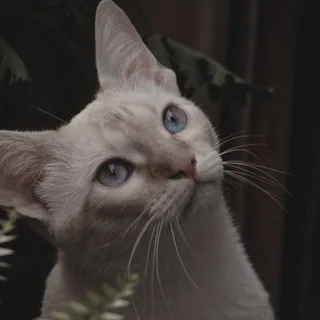
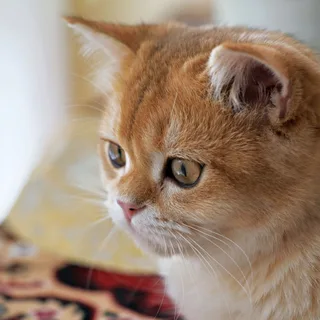
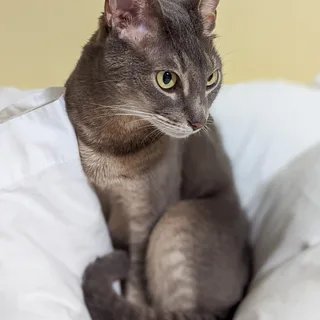
The Burmilla is a medium-sized cat, with a sturdy and well-muscled body, often heavier than it looks. Its head is round, its eyes large, rounded and very expressive, generally highlighted by a dark outline. The ears are wide at the base and rounded at the tip. Its coat is short, soft and fairly thick, with a tipped appearance in which the color is concentrated on the tip of the hairs, which gives it a delicately shaded look that is very characteristic.
Temperament
Temperament and personality
The Burmilla is a gentle, demonstrative cat and very affectionate towards its family. Less turbulent than the Burmese, it nevertheless retains a real taste for play, exploration and daily interactions. It greatly appreciates attention, petting and human presence, which makes it a warm companion and close to its adopters.
Living together
Living with children and animals
The Burmilla readily alternates moments of calm and phases of activity. He likes to climb, run and play, and makes full use of a cat tree or a stimulating space. He generally gets along well with children and other animals. On the other hand, he can be quite talkative and does not tolerate being constantly neglected.
Training
Training and socialization
The education of the Burmilla is based mainly on consistency, environmental enrichment and positive interactions. This cat responds well to stable routines and gentle stimulation, notably through play and reward. It is advisable to channel its need for activity with toys, observation posts and daily rituals in order to avoid boredom and weight gain.
Budget
Burmilla price & budget
The purchase price of a Burmilla varies depending on the lineage, the quality of the coat, the reputation of the breeding cattery and the rarity of the breed. The latter remains uncommon in France, which can influence the availability of kittens and the level of the price asked.
View cost breakdownHealth
Health at a glance
The Burmilla is considered a rather sturdy cat and, due to the relative youth of the breed, no specific hereditary disease is clearly highlighted in the reference sources consulted. Like all cats, it nevertheless requires regular veterinary follow-up, up-to-date vaccination and good hygiene of life, with particular attention paid to weight.
Prevention & watch pointsDiet
Feed it well
The Burmilla needs a quality, balanced and complete diet, adapted to its age, its activity level and its body condition. Its diet must prioritize consistent nutritional intake and be monitored seriously, as the breed can easily gain weight.
Our feeding adviceDid you know?
Anecdotes and popularity
The name Burmilla comes directly from the contraction of Burmese and Chinchilla, the two lineages at the origin of the breed. Despite its refined appearance, this cat is appreciated as much for its gentle temperament as for its very bright tipped coat. It is still not very widespread in France, which makes it a rather confidential breed.