Origins
Where does it come from?
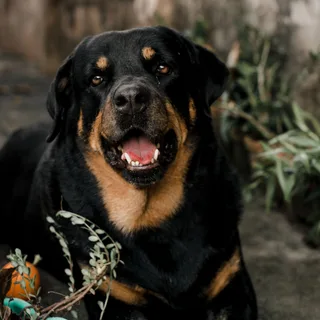
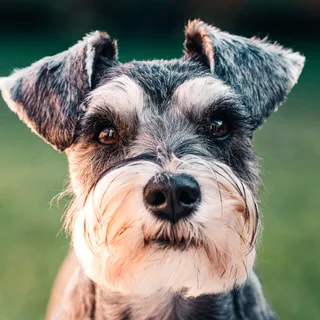
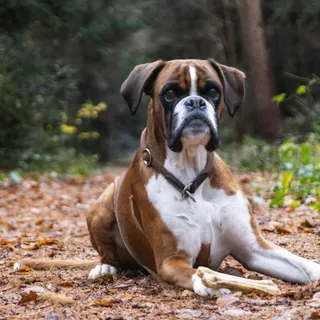
The Russian Black Terrier was developed in Russia after the Second World War from selective crossbreeding involving in particular the Giant Schnauzer, the Rottweiler, the Airedale Terrier and the Newfoundland. Military specialists were then looking for a large versatile dog, robust and able to work in varied climatic conditions. First classified among the terriers by the FCI, it was then attached to group 2 due to its type proximity with schnauzers, then recognized definitively in 1983.
Appearance
What does it look like?
The Russian Black Terrier is a large robust, rustic and athletic dog, with a silhouette slightly longer than tall. Its bone structure is imposing, its musculature powerful and its overall appearance gives an impression of controlled strength. The head is long and powerful, the eyes are dark, the ears triangular and pendulous, and the coat is harsh, thick, slightly wavy, with a dense undercoat. The coat is black, sometimes sprinkled with a very small number of gray hairs.
Temperament
Temperament and personality
The Russian Black Terrier is a dignified, balanced and self-confident dog. Protective when the situation requires it, he quickly regains his calm once the alert has passed. Attached to his family, reliable and stable in everyday life, he combines a real deterrent presence with a generally controlled temperament.
Living together
Living with children and animals
This dog appreciates being close to its owner and does not cope well with a life that is too inactive or too isolated. At home, it knows how to adapt to the family routine, but it needs space, consistent outings and regular interactions to stay comfortable in its paws. Its guarding instinct is pronounced and it willingly observes its environment before acting.
Training
Training and socialization
The education of the Russian Black Terrier must begin early and remain firm, consistent and fair, without a power struggle. Its intelligence and receptiveness make learning easier, but its strong-willed side requires a calm, steady handler capable of setting a clear framework. Serious socialization is important to channel its natural vigilance.
Budget
Black Russian Terrier price & budget
The purchase price varies depending on the origin of the line, the reputation of the breeding kennel, health tests and the quality of the follow-up offered. For this breed that is still relatively rare, the price gap is often explained by the seriousness of the selection and socialization.
View cost breakdownHealth
Health at a glance
Rustic and resilient, the Russian Black Terrier remains a large breed that deserves careful health monitoring throughout its life. Like many powerful and heavy dogs, it may present certain osteo-articular and ocular predispositions that are worth monitoring from the youngest age.
Prevention & watch pointsDiet
Feed it well
The Russian Black Terrier needs a complete and digestible diet, adapted to its large size, its muscle mass and its activity level. The quality of the ration matters as much as its quantity, especially during growth and in the active adult.
Our feeding adviceDid you know?
Anecdotes and popularity
The Russian Black Terrier is sometimes known under the names Black Russian Terrier and Tchiorny Terrier. Despite its name, it is closer to the schnauzer type than to the terrier in the morphological and functional sense. Its development in Russia met a very specific utilitarian objective: to obtain a large service dog that is enduring, versatile and resistant.