Origins
Where does it come from?
The Saint Bernard owes its name to the Grand-Saint-Bernard pass, in Switzerland, where the monks of the hospice bred large, sturdy dogs for guarding, assistance and the rescue of travelers lost in the snow. Its reputation as a rescue dog established itself over time, notably after the passage of Napoleonic troops through the region, then the breed was structured in Switzerland with the creation of the Saint Bernard club in 1884.
Appearance
What does it look like?
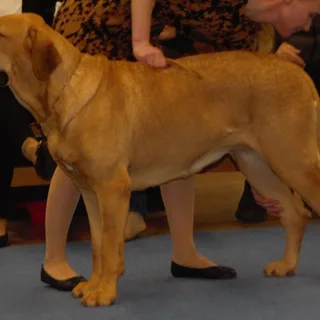
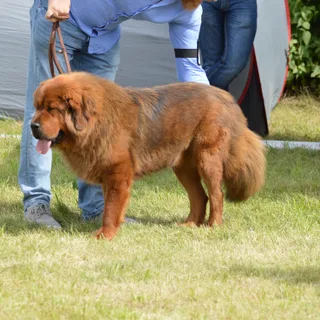
The Saint Bernard is a very large mountain dog, massive, powerful and harmonious. Its head is broad and expressive, the body is muscular with a firm back and a well-developed chest, and the tail is long and heavy. The coat is white with red-brown markings more or less extensive, and the coat exists in a short-haired or long-haired variety, always with a protective undercoat.
Temperament
Temperament and personality
The Saint Bernard is a gentle, peaceful dog and deeply attached to its family. It is very affectionate, patient with children and naturally protective without being unnecessarily aggressive. Its calm temperament can be accompanied by a certain stubbornness, which requires a consistent framework from the youngest age.
Living together
Living with children and animals
On a daily basis, the Saint Bernard is rather calm, but it must not be reduced to inactivity. It enjoys regular walks, time spent with its family and environments where it can move around freely. Its territorial instinct is real and its size requires serious management of its habits, especially in adulthood.
Training
Training and socialization
The education of the Saint Bernard must start early, with stable rules, firm and caring handling and regular socialization. The breed learns well, but its size and sometimes stubborn temperament require consistency. Brutal methods should be avoided, as they harm the cooperation of a sensitive and intelligent dog.
Budget
Saint Bernard price & budget
The purchase price of the Saint Bernard varies depending on origin, the quality of the breeding, the lineage and the follow-up offered. Beyond the initial cost, you must anticipate a high maintenance budget linked to size, food, bedding, transport and care.
View cost breakdownHealth
Health at a glance
The Saint Bernard is generally quite hardy, but its very large size exposes it to several points of vigilance, particularly on the orthopedic, ocular and digestive levels. Well-managed growth, controlled weight and regular veterinary follow-up are essential to preserve its comfort and mobility.
Prevention & watch pointsDiet
Feed it well
The Saint Bernard's diet must support very rapid growth and then maintain a substantial mass without promoting overweight. The quality of the ration has a direct impact on bone development, musculature, digestion and the functional longevity of this giant dog.
Our feeding adviceDid you know?
Anecdotes and popularity
The Saint Bernard remains one of the most famous rescue breeds in the world. Its image as a mountain rescue dog has strongly marked popular culture, even if the famous little barrel around its neck is mostly a matter of legend. Its spectacular growth, from less than a kilo at birth to several dozen kilos before adulthood, also makes it a particularly impressive breed to follow.