Origins
Where does it come from?
The Mastiff is a very ancient British molossoid whose origins are often linked to Antiquity. Accounts already mention it during the invasion of Britain by Caesar's troops, who are said to have discovered massive dogs of exceptional power. Used over the centuries as a guard and protection dog, it went through wars and nearly disappeared after the Second World War before being revived. The breed was recognized by the Fédération Cynologique Internationale in 1964.
Appearance
What does it look like?
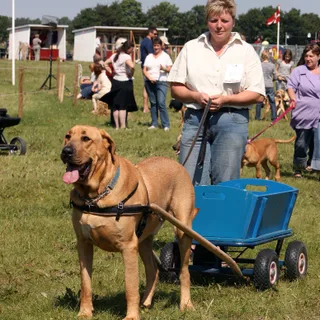
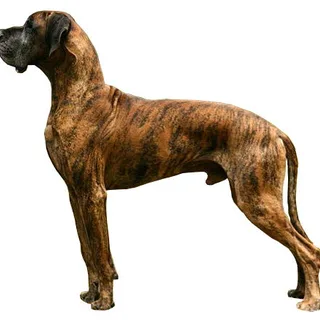
The Mastiff is a giant dog with a muscular and harmonious body, built to exude power and nobility. Its skull is broad and rather square, with a well-defined stop, well-spaced hazel eyes and small fine ears set high. Its coat is short, close and denser on the shoulders and back. Accepted colors range from sand to fawn, to apricot, to gray or brindle, with a typical black mask.
Temperament
Temperament and personality
Behind his very deterrent appearance, the Mastiff is a calm, affectionate dog and deeply attached to his family. He is gentle with those close to him, patient with children when he is well socialized, and naturally protective without being unnecessarily demonstrative. Often indifferent to strangers, he nevertheless knows how to intervene if his owners seem threatened.
Living together
Living with children and animals
The Mastiff appreciates a peaceful, stable and family life. Despite his stature, he is not a tireless athlete and prefers regular walks to intense exertion. He does not tolerate apartment living well because of his size and thrives more in a house with space. Indoors, he likes calm and readily seeks the closeness of his humans.
Training
Training and socialization
The Mastiff’s training must begin early, with consistent rules and careful socialization. This is not a dog known for spontaneous obedience, and its size requires teaching it very young to walk on a leash and self-control. A confident, patient and consistent owner gets better results with a positive method, firm but never harsh.
Budget
Mastiff price & budget
The Mastiff is a giant breed still relatively rare, whose purchase cost reflects selection, health monitoring and breeding expenses. Its large size then implies a sustained maintenance budget, especially for food and health.
View cost breakdownHealth
Health at a glance
The Mastiff is a powerful dog, but its growth and its first years require particular vigilance. Like many giant breeds, it can present osteo-articular and digestive fragilities, and its life expectancy remains relatively short. Regular veterinary follow-up, well-managed growth and prudent management of effort are essential.
Prevention & watch pointsDiet
Feed it well
The Mastiff needs a high-quality diet adapted to giant dogs, with particular attention during growth. Its meals must support its muscle mass without promoting excessive weight gain or overly rapid growth.
Our feeding adviceDid you know?
Anecdotes and popularity
The Mastiff is considered one of the oldest molossoid-type dogs in Europe. Its mere presence is often enough to discourage intruders, whereas in everyday life it generally shows itself calm and very close to its home. The breed has gone through several critical periods in its history, which partly explains its relative rarity and certain health fragilities.