Origins
Where does it come from?
The Leonberger owes its name to the German town of Leonberg, near Stuttgart. Between the years 1830 and 1840, Heinrich Essig undertook to create a very large dog with a lion-like appearance by crossing in particular Newfoundland, Saint Bernard and then Pyrenean Mountain Dog. Used as a guard and draft dog on farms, its population declined sharply after the two world wars before being preserved and then definitively recognized by the FCI in 1955.
Appearance
What does it look like?
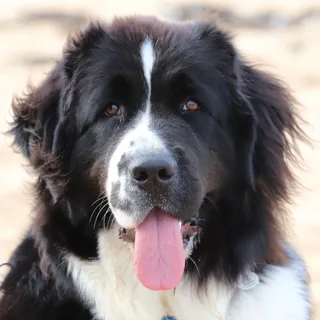
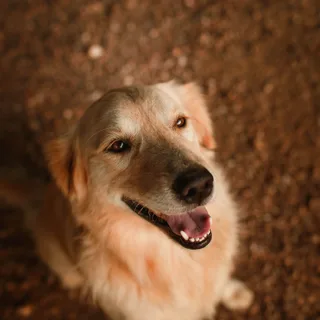
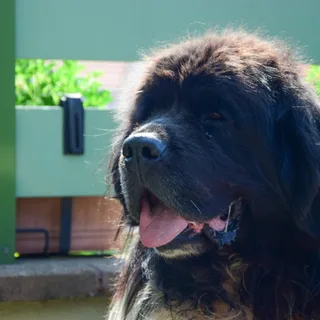
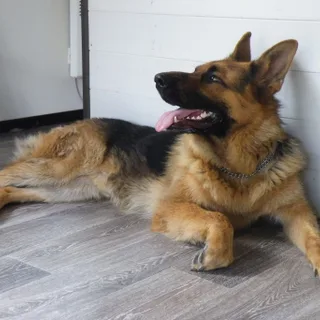
The Leonberger is a giant dog, massive and well built, without excessive heaviness. Its head is rather elongated, its body is powerful and harmonious, its chest is broad and its tail is abundantly furnished with hair. Its long, straight and dense coat, with a thick undercoat, comes in different shades of fawn or sand and is accompanied by a characteristic black mask.
Temperament
Temperament and personality
Calm, placid and well-balanced, the Leonberger is an affectionate dog, self-confident and generally very stable. He is gentle with his family, particularly with children, while retaining a strong protective instinct that makes him a deterrent guard dog without excessive aggression.
Living together
Living with children and animals
On a daily basis, the Leonberger appreciates family life, the closeness of its humans and a spacious environment. It is not a hyperactive dog, but it needs regular walks and calm interactions to stay comfortable in its paws. Its size requires space and good management of movement, especially indoors.
Training
Training and socialization
The Leonberger is intelligent and docile, but its training must begin early with serious socialization and consistent rules. Given its size, it is essential to quickly achieve good leash walking, solid self-control and reliable obedience, favoring a firm, calm and positive method.
Budget
Leonberger price & budget
The purchase price of the Leonberger mainly reflects the selection of breeding dogs, the seriousness of the breeding program and the socialization work carried out beforehand. Its large size then implies a long-term high maintenance cost, notably for food and health monitoring.
View cost breakdownHealth
Health at a glance
The Leonberger is generally robust and tolerates cold well, but its large size exposes it to several orthopedic, neurological and digestive conditions that justify serious monitoring throughout life. The choice of a rigorous breeding program and control of growth are particularly important in this breed.
Prevention & watch pointsDiet
Feed it well
The Leonberger needs a high-quality diet, suited to giant dogs and their growth rate. The composition of the ration must support muscle mass without promoting excessive weight gain or overly rapid growth in the young dog.
Our feeding adviceDid you know?
Anecdotes and popularity
The Leonberger was developed to evoke the lion on the coat of arms of the city of Leonberg. Despite its impressive appearance, it is mainly sought today as a large companion and family guard dog, appreciated for its rare blend of power, gentleness and calmness.