Origins
Where does it come from?
The Pomsky is a recently created dog, developed in the United States in the early 2010s from a Pomeranian and a Siberian Husky. Its spread was very rapid thanks to its expressive appearance and compact size. As it is a breed that is still not very standardized and not recognized by the major international canine organizations, litters may show marked variations in size, type and temperament.
Appearance
What does it look like?
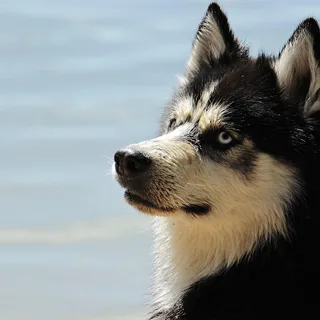
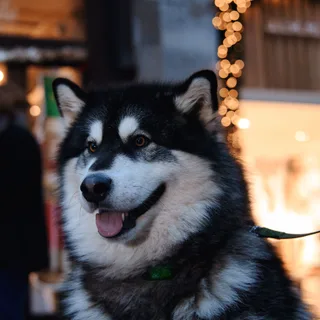
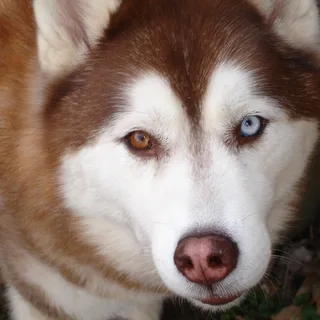
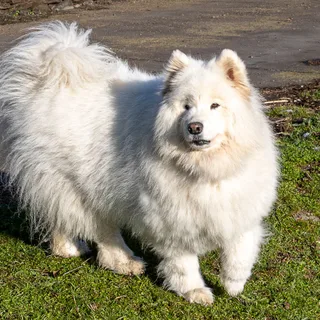
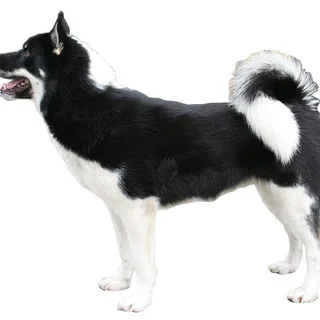
The Pomsky is a compact, dense and well-proportioned dog, with a silhouette more solid than its small size suggests. It has a thick double coat, erect triangular ears, almond-shaped eyes sometimes heterochromatic, and a well-furnished tail that can curl over the back when in action. Its appearance resembles that of a small Nordic dog, but the morphology remains variable depending on the dominant ancestry and the generation.
Temperament
Temperament and personality
The Pomsky is generally affectionate, sociable and close to its home. It often combines the liveliness of the Spitz and a degree of independence inherited from the Husky, which results in an endearing dog but not always consistent in its reactions. It likes to share family life, appreciates attention and can be sensitive to the atmosphere of the home.
Living together
Living with children and animals
Active and playful, the Pomsky enjoys walks, interactions and activities that stimulate both its body and mind. It can live in an apartment if its need to go out is respected, but it does not tolerate prolonged boredom well. Depending on the bloodlines, it can be more demonstrative, more talkative or more independent, hence the importance of a regular framework from an early age.
Training
Training and socialization
The Pomsky’s training must be consistent, positive and early. Its socialization is a central point, because its temperament can vary depending on the proportion of Spitz or Husky it inherits. Short, motivating and repeated sessions give better results than work that is too long, and the owner’s consistency is essential when faced with a dog that is sometimes stubborn or independent.
Budget
Pomsky price & budget
The Pomsky is a sought-after dog whose purchase price remains high due to its popularity, the complexity of its breeding, and the selection carried out by specialized breeders. Price differences depend greatly on the type sought, the selection work, and the breeder’s seriousness.
View cost breakdownHealth
Health at a glance
The Pomsky is generally considered a rather robust dog, especially when it comes from a reputable breeder who selects healthy breeding dogs. Its double coat protects it well from bad weather, but its health still needs to be monitored carefully due to the youth of the breed and the genetic variability of the bloodlines.
Prevention & watch pointsDiet
Feed it well
The Pomsky needs an easily digestible and well-balanced diet, rich in quality animal proteins. As some individuals digest rations that are too high in starch less well, the choice of food must prioritize the quality of the ingredients and adaptation to the dog's actual size.
Our feeding adviceDid you know?
Anecdotes and popularity
The Pomsky is often classified into F1, F2 or F3 types to describe the degree of crossbreeding and the lineage of the dogs. This young breed owes a large part of its popularity to its mini Husky appearance and its wide exposure on the internet. Its rapid success has nevertheless been accompanied by great heterogeneity among individuals, due to the lack of a stabilized universal standard.