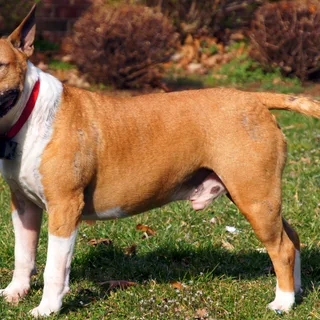
A menu for every age
Needs change over time
Puppy : A growth diet for a medium-sized puppy helps support muscular and bone development without excess energy.
Adult : In adulthood, a balanced formula for an active dog helps maintain muscle mass and a stable weight.
Senior : In seniors, a more digestible diet with moderate calories can help preserve mobility and overall comfort.
Which food?
Kibble, wet food, or home-cooked diet?
Premium kibble for an active medium-sized dog is often very suitable. A home-prepared ration can also be considered if it is formulated in a balanced way with the help of a veterinarian.
Amounts
How much should you give?
The daily amount depends on weight, activity, age, sterilization and the energy density of the chosen food. It must be adjusted by observing body condition rather than by following a fixed value for all dogs.
| Weight | Daily amount | Meals/day |
|---|---|---|
| 13 - 19 kg | 283 - 388 g | 2 |
| 19 - 24 kg | 341 - 468 g | 2 |
| 24 - 30 kg | 420 - 576 g | 2 |
Change
Managing the food transition
Any change in diet must be gradual over 7 to 10 days in order to limit digestive disorders. The proportion of the new food is increased little by little until complete replacement.
Hydration
Water: do not overlook it
Clean, fresh water must remain available at all times. After exertion or in hot weather, hydration must be monitored even more closely.
Little extras
Treats, in moderation
Treats can be useful for training, provided they remain occasional and are included in the total daily ration. They must be simple, digestible and given without excess.
Good habits
For a top-notch bowl
- Split the ration into 2 meals per day.
- Regularly monitor body condition and adjust the ration if needed.
- Introduce any new food gradually.
- Limit treats to avoid weight gain.
Never give
As with other dogs, chocolate, onion, garlic, grapes, avocado, alcohol, cooked bones, yeast dough and products containing xylitol should be avoided, as they can cause severe digestive disorders, neurological poisoning or blood and kidney damage.